This post may contain affiliate links. Please read our disclosure policy.
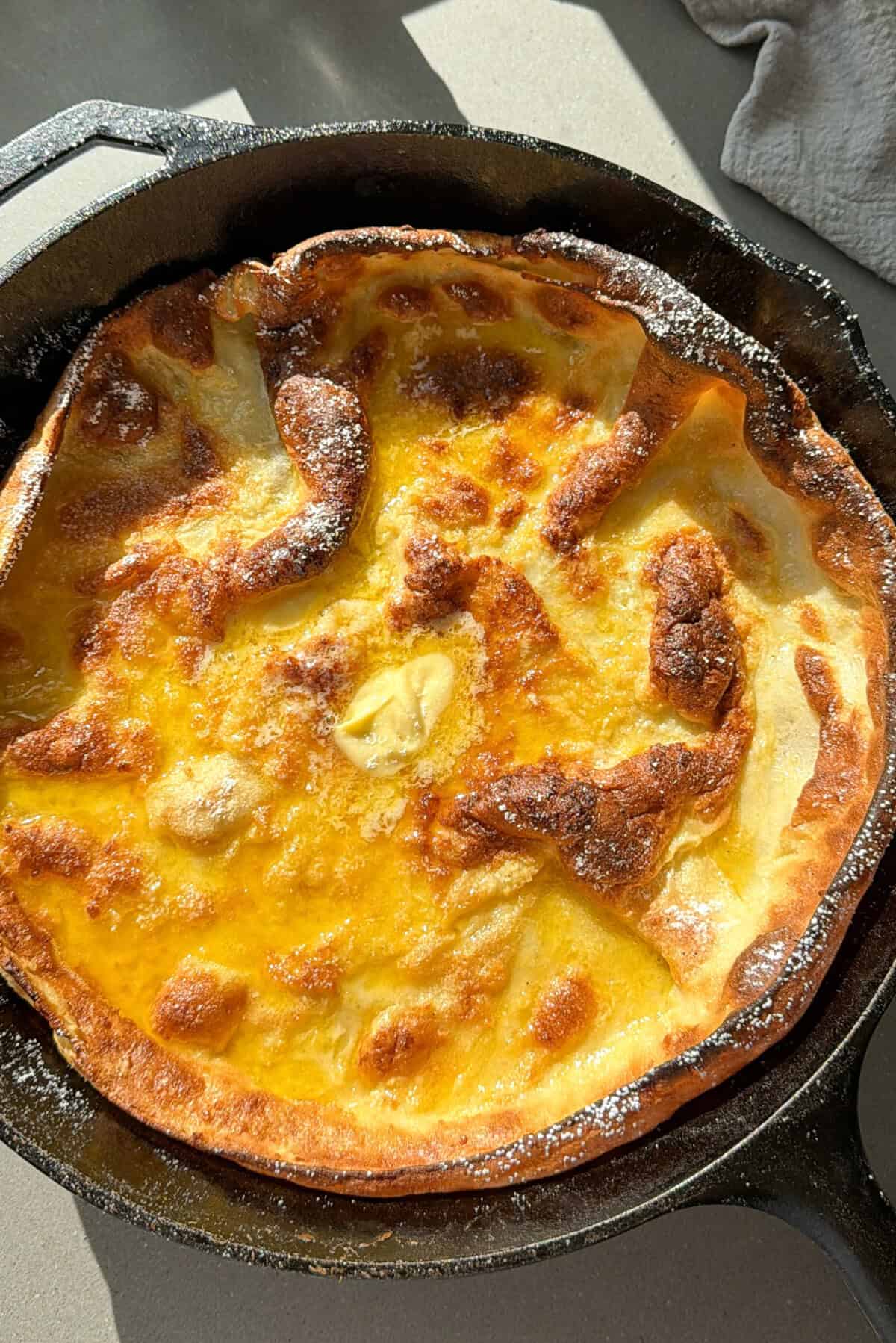
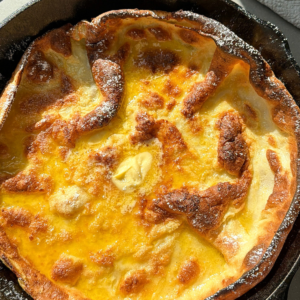
This Dutch baby pancake is baked in a hot cast-iron skillet until the edges puff dramatically and turn golden brown while the center stays soft and custardy. Made with simple ingredients like eggs, milk, flour, butter, and vanilla, it’s finished with powdered sugar, whipped butter, and fresh squeezes of lemon just like the Original Pancake House.
Behind This Dutch Baby Pancake Recipe
I grew up in Portland, Oregon, and one of my favorite breakfast spots has always been the Original Pancake House on Barbur Blvd. (which was their very first location that opened in 1953!).
Now that I live in Georgia and travel quite a bit, I can confidently say that location is the only one that truly mastered the Dutch baby. I’ve tried ordering them at other Original Pancake House locations over the years, and they’re just never the same.
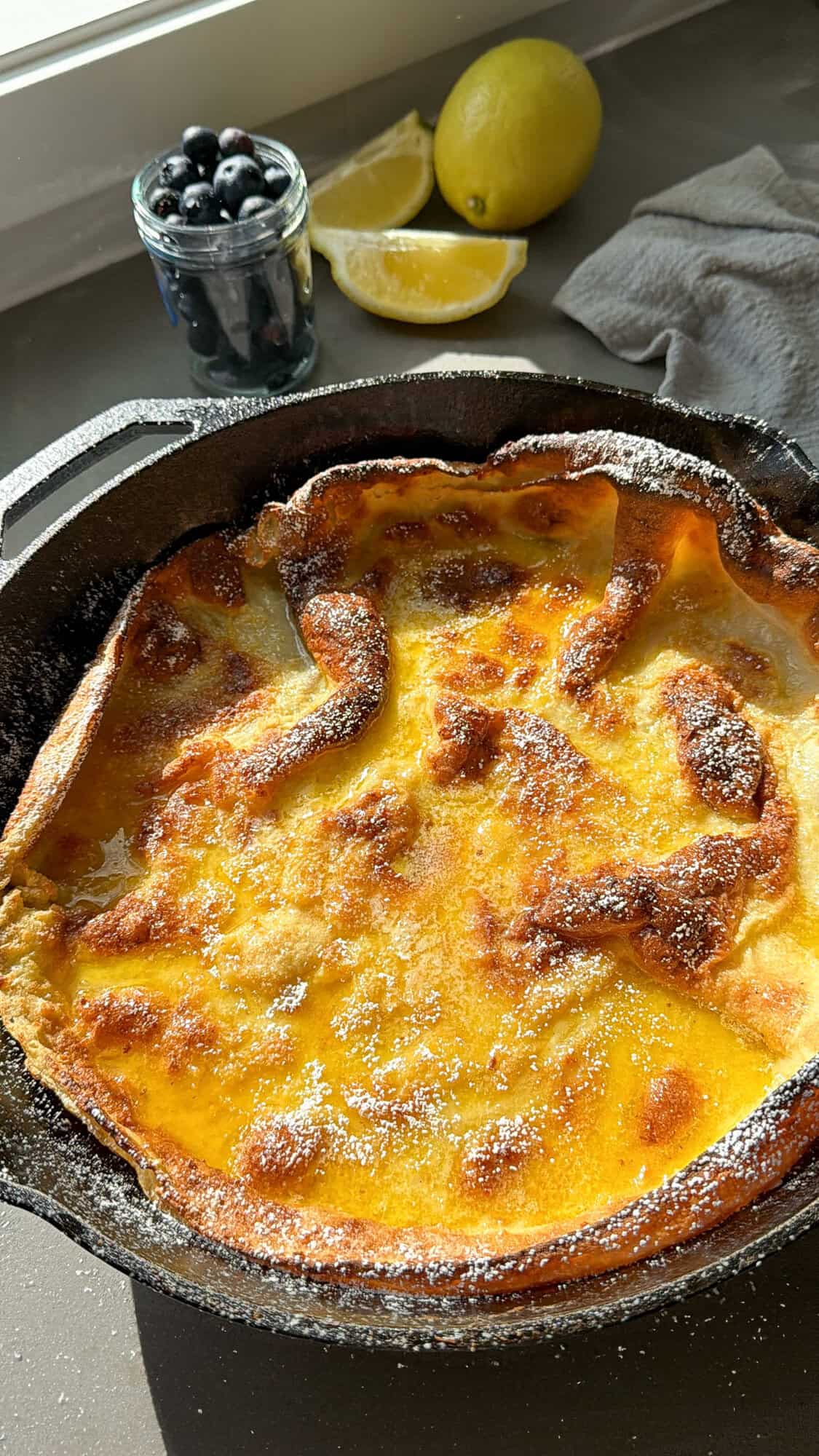
Unlike recipes you’ll find online that include fruit toppings, here you’ll only find three toppings – powdered sugar, whipped butter, and lemon wedges.
Whenever I go back home, I always take my hubby there because it’s become his fave too. We pick one day to wake up at 5:30 am and arrive just before they open because this place gets packed quickly. And without fail, he orders the Dutch baby every single time (and yes, he literally eats the whole thing in one sitting!).
On my last visit, I finally asked the server if she knew any tricks to making them so good. She told me the cast-iron skillet is key, and to pour the batter directly into the hot butter without disturbing it before baking. That was all she knew of the “secret recipe,” but honestly, that advice changed everything.
This version comes incredibly close to the original — crispy golden edges, buttery flavor, and that soft lemony center that makes their Dutch babies so unforgettable.
Tips From My Kitchen
- Preheat the oven fully. The high heat is what creates the dramatic rise. Be sure not to leave the oven open too long when you come and go with the pan as the heat escapes quickly.
- Use a cast-iron skillet. It retains heat best and helps create crispy edges.
- Don’t stir the butter into the batter. Pour the batter directly over the hot butter and leave it untouched.
- Work quickly once the skillet comes out. You want the pan and butter as hot as possible when the batter goes in. You will see the batter start to set up immediately in the hot pan.
- Serve immediately. Dutch babies naturally deflate as they cool.
Ingredients You’ll Need & Why
These pantry and fridge staple ingredients create the classic texture and flavor of a Dutch baby pancake. Be sure to read the recipe card below for the measurements.
Eggs – Give the pancake its signature puffed structure and custardy center.
Milk – Helps create a light, pourable batter.
Flour – Provides structure while still keeping the center tender.
Butter – Creates the rich flavor and crispy golden edges.
Vanilla extract – Adds warmth and complements the batter’s sweetness.
Lemon, whipped butter, powdered sugar – The traditional finishing combination that balances the buttery richness perfectly.
Let Me Show You How to Make a Dutch Baby Pancake
The Dutch Baby is so simple to make that you’ll quickly memorize the recipe and make it for every special occasion, like Christmas and Easter.
Preheat the Oven
Start by preheating your oven to 425°F for at least 15 minutes to ensure it’s nice and hot. A very hot oven is essential for getting that dramatic rise.
Mix the Batter
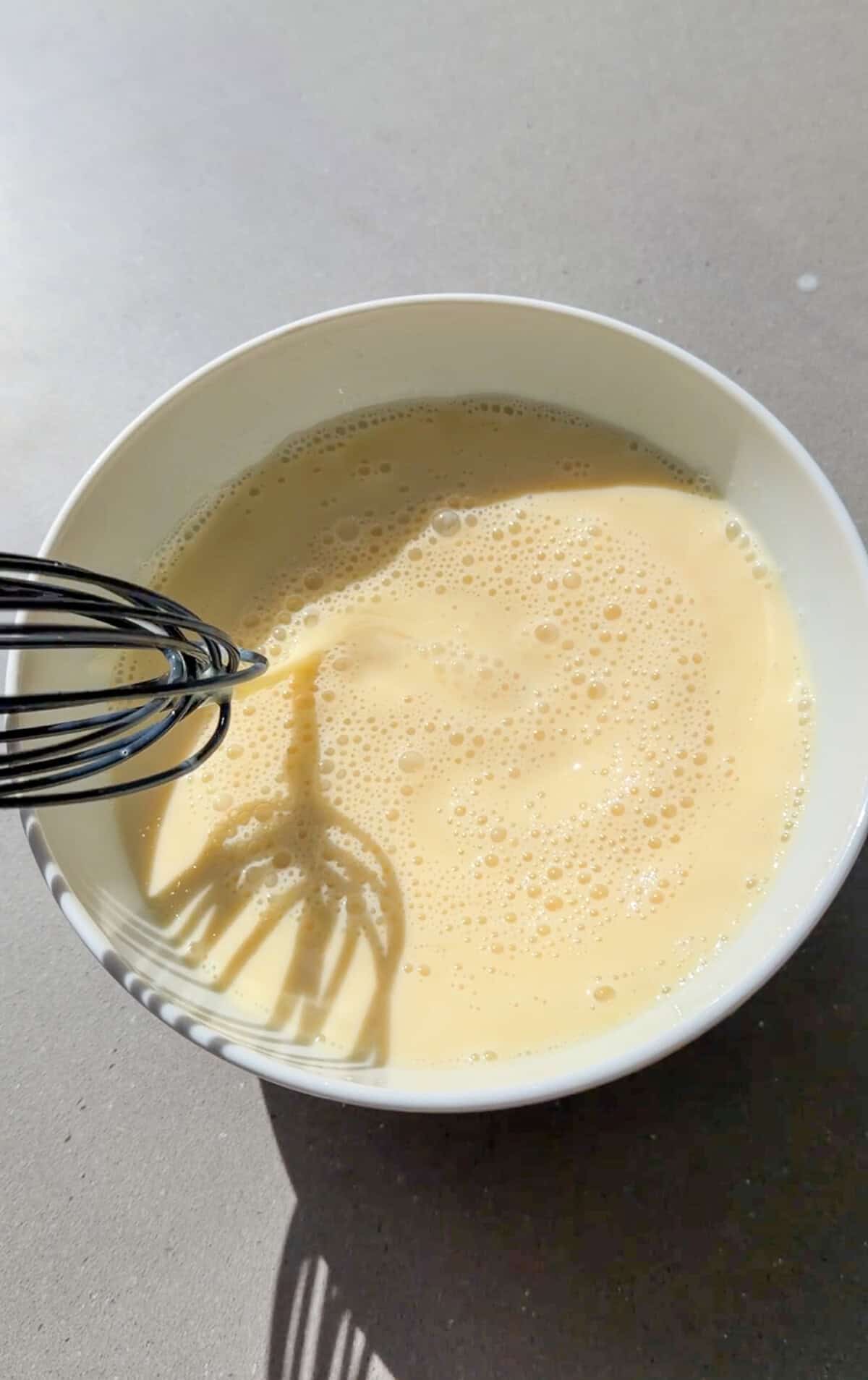
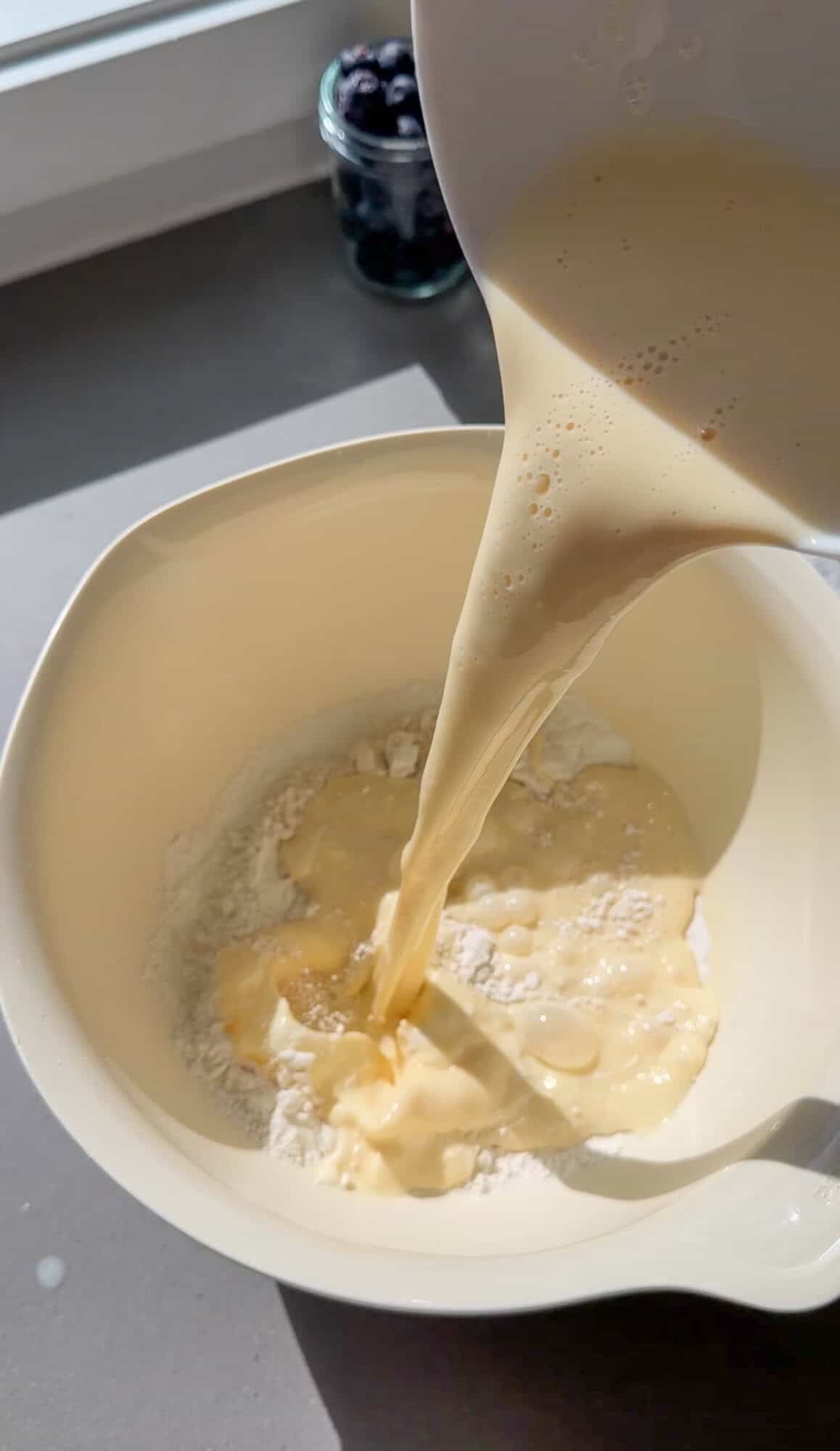
In one medium-sized bowl, vigorously whisk together the eggs, milk, and vanilla until smooth and frothy. Add in the flour, sugar, and salt, and continue to whisk until the batter is smooth and lump-free.
The batter should be thin and pourable.
Melt the Butter
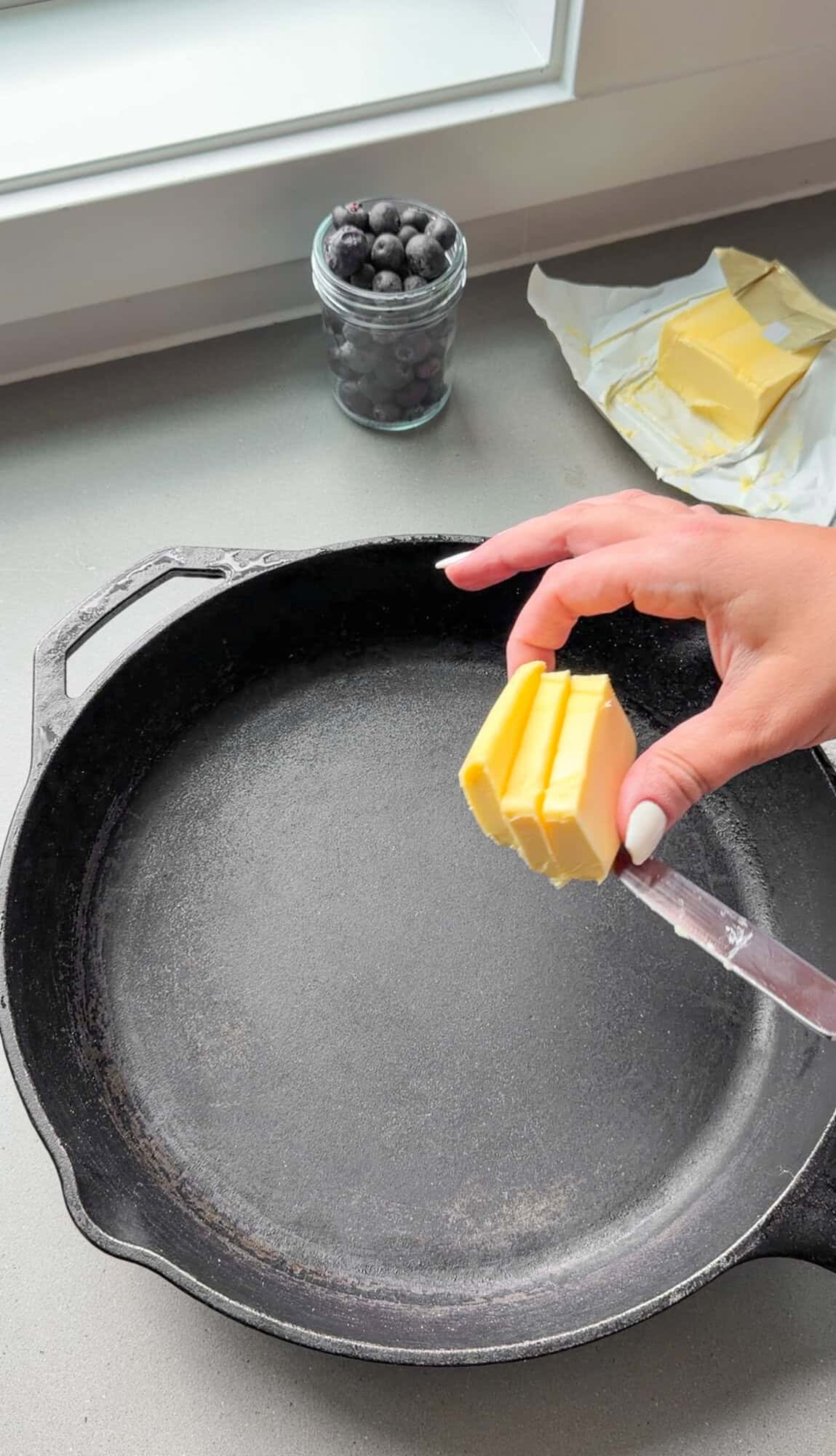
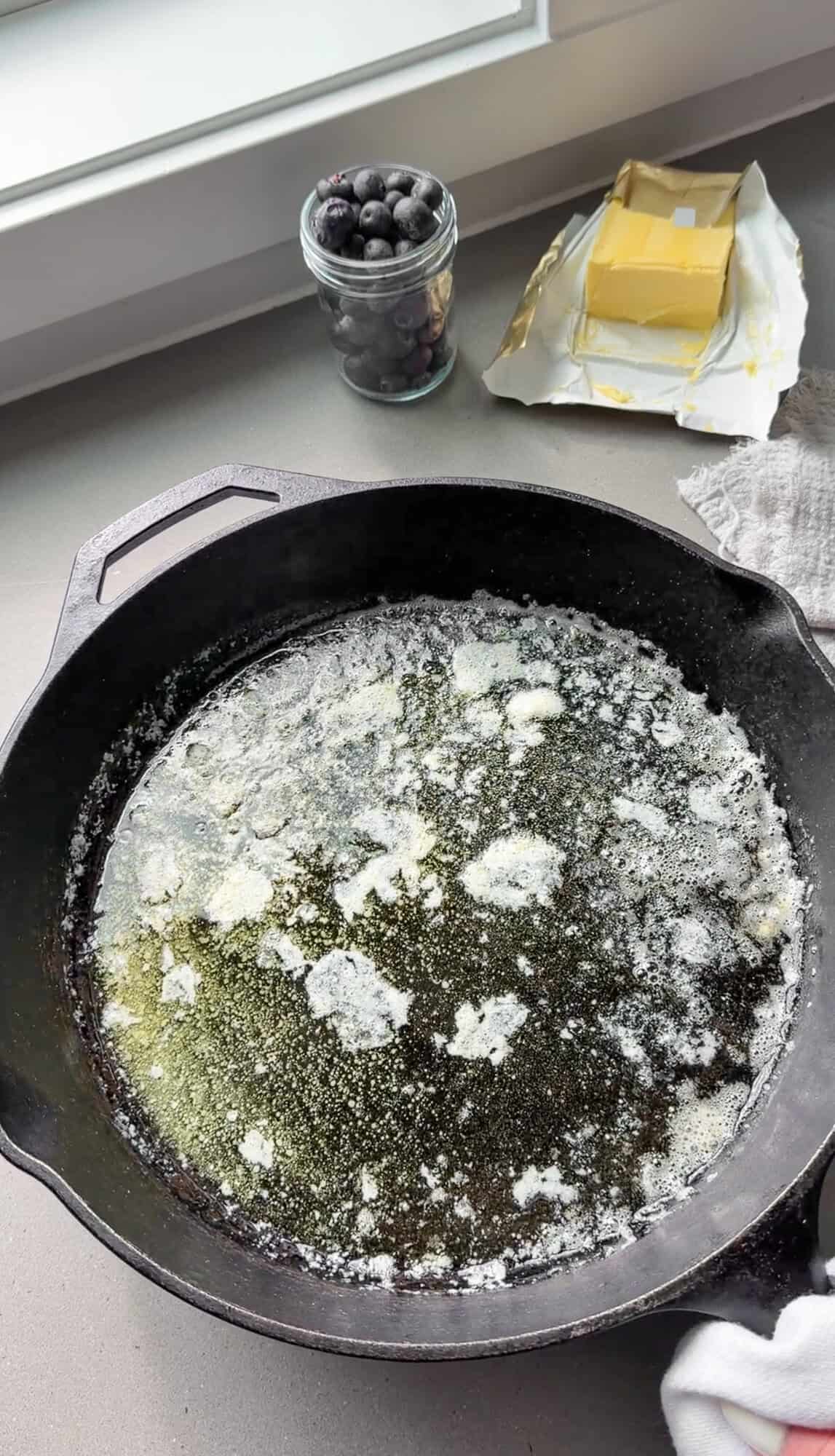
Add the butter to the cast-iron skillet and place it in the oven until fully melted and sizzling, being careful not to let it burn. This usually takes about 5 minutes.
Once melted, carefully remove the skillet from the oven. Use a pastry brush or the butter stick itself to quickly coat the inner sides of the skillet with the hot butter.
Add the Batter
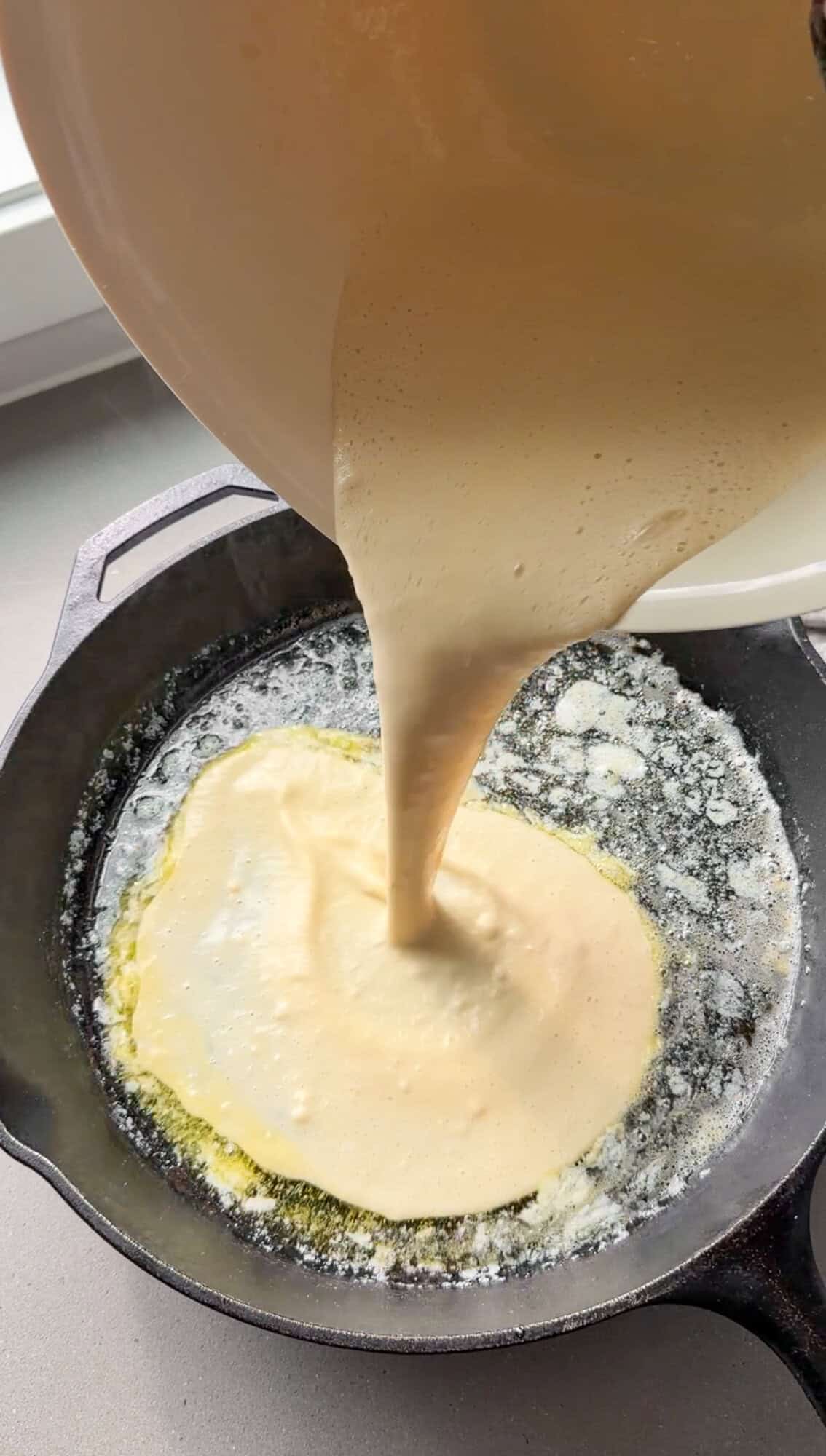
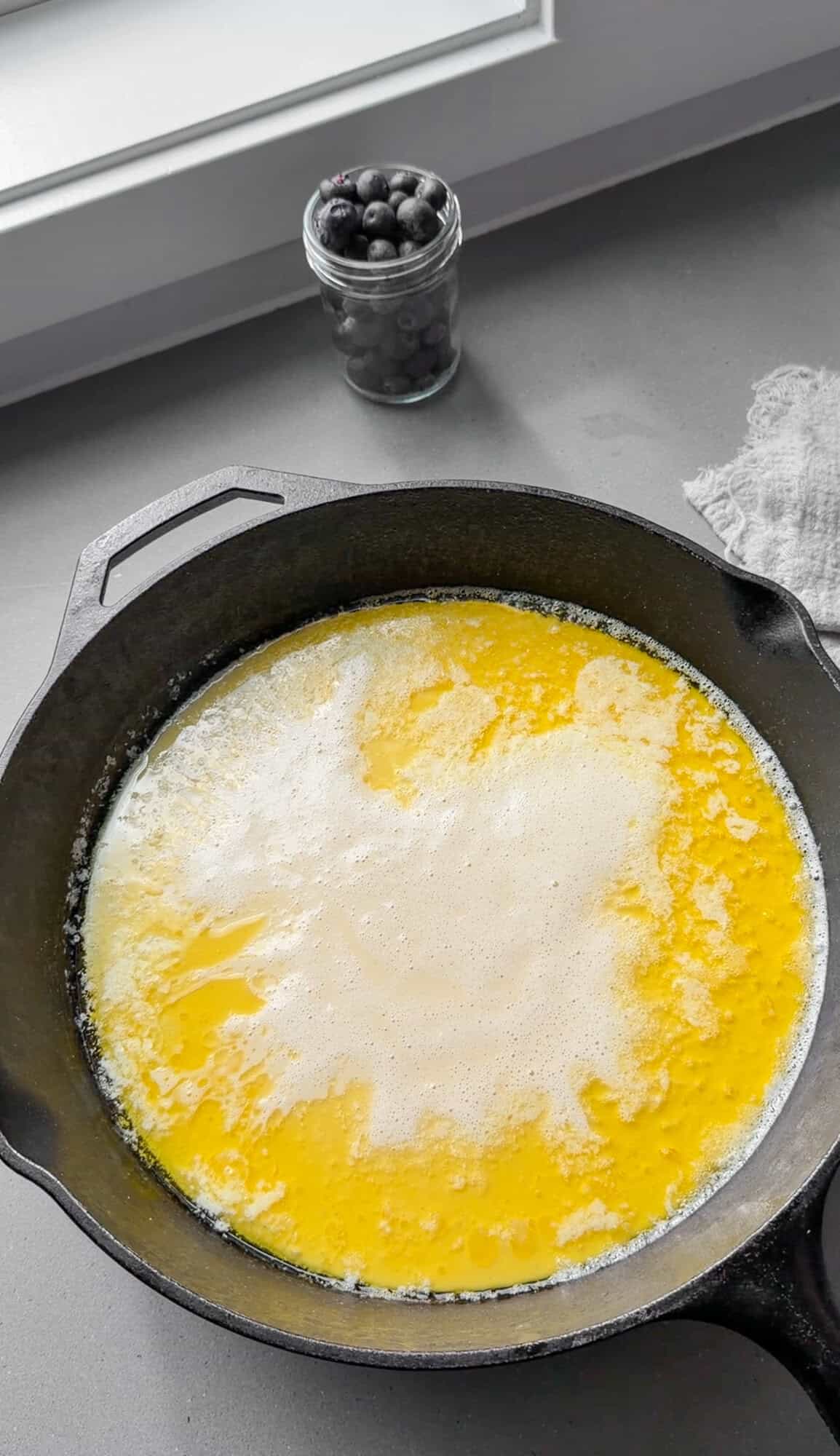
Immediately pour the batter into the center of the hot buttery skillet.
Do not stir the butter into the batter. Leaving the butter layer untouched helps create those crisp, golden edges while the pancake bakes.
Transfer the skillet back into the oven immediately. Avoid cracking the door open to check on it; instead, use the inner oven light and peek through the window. This helps keep the temp consistent.
Bake Until Puffy and Golden
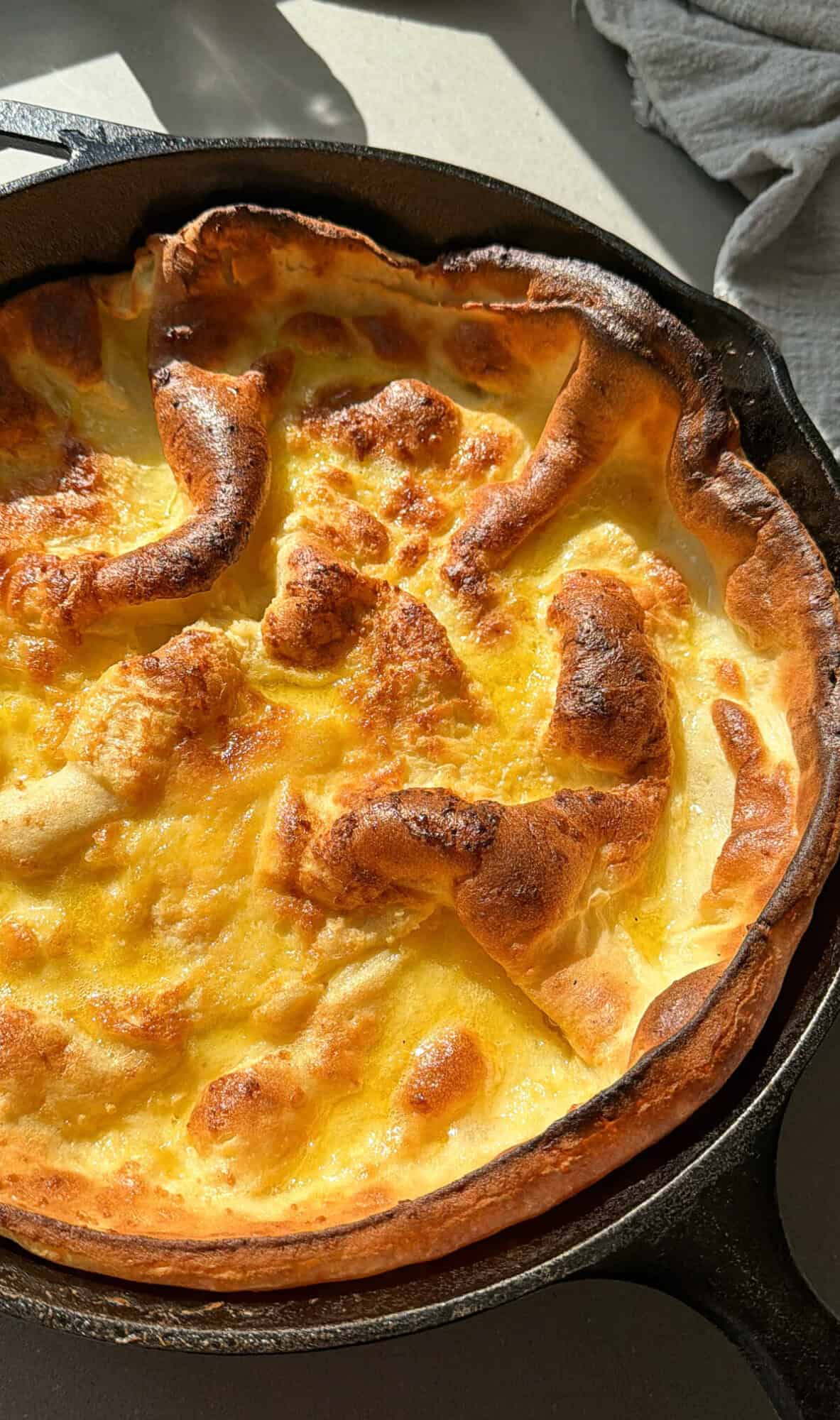
Bake at 425°F until the pancake puffs up dramatically around the edges, about 18-20 minutes. At this point, the edges should be deeply golden brown, and the center should be set.
If it needs additional time, reduce the oven temperature to 325°F and continue baking until it’s set.
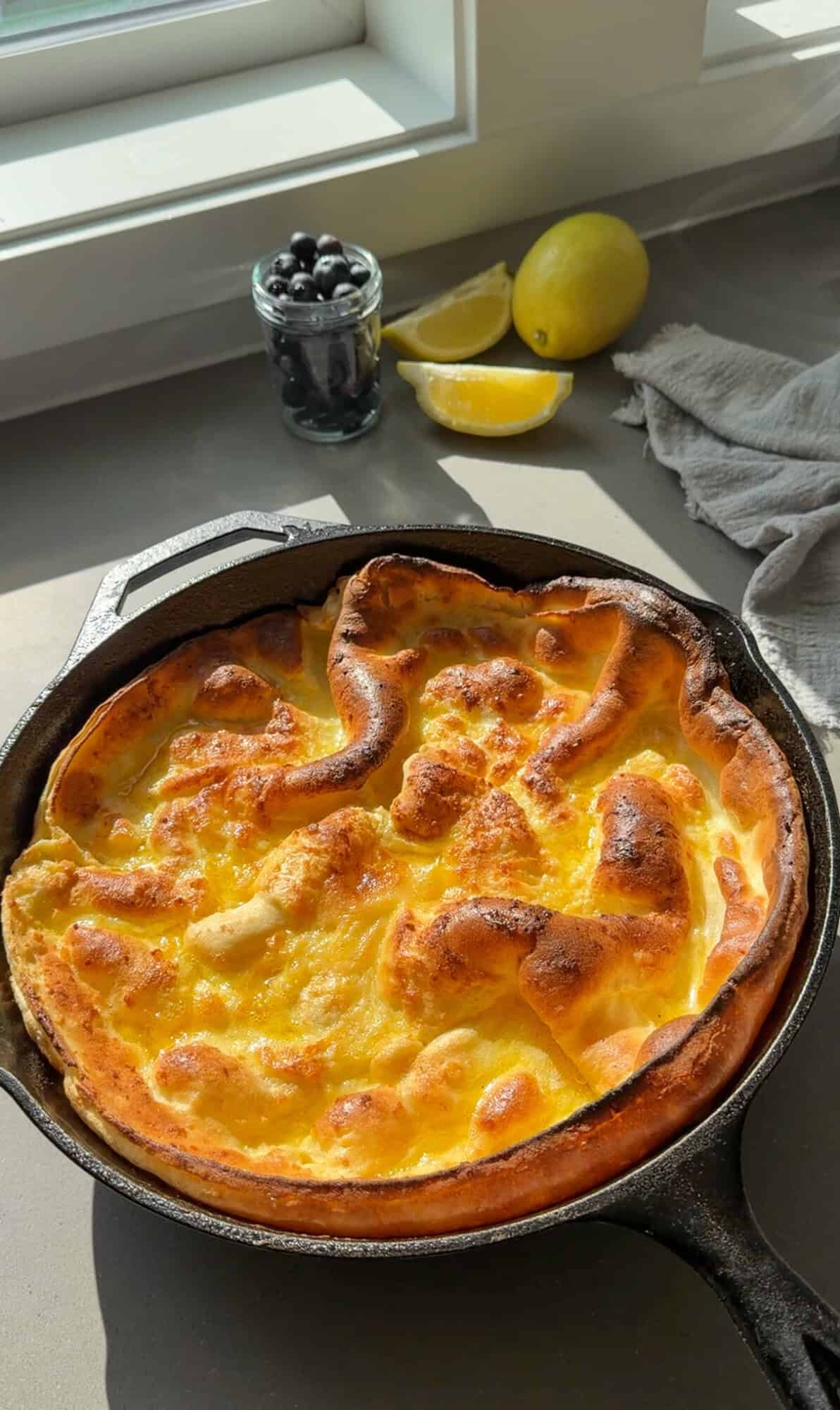
The pancake should look airy and dramatically puffy straight out of the oven.
Finish and Serve
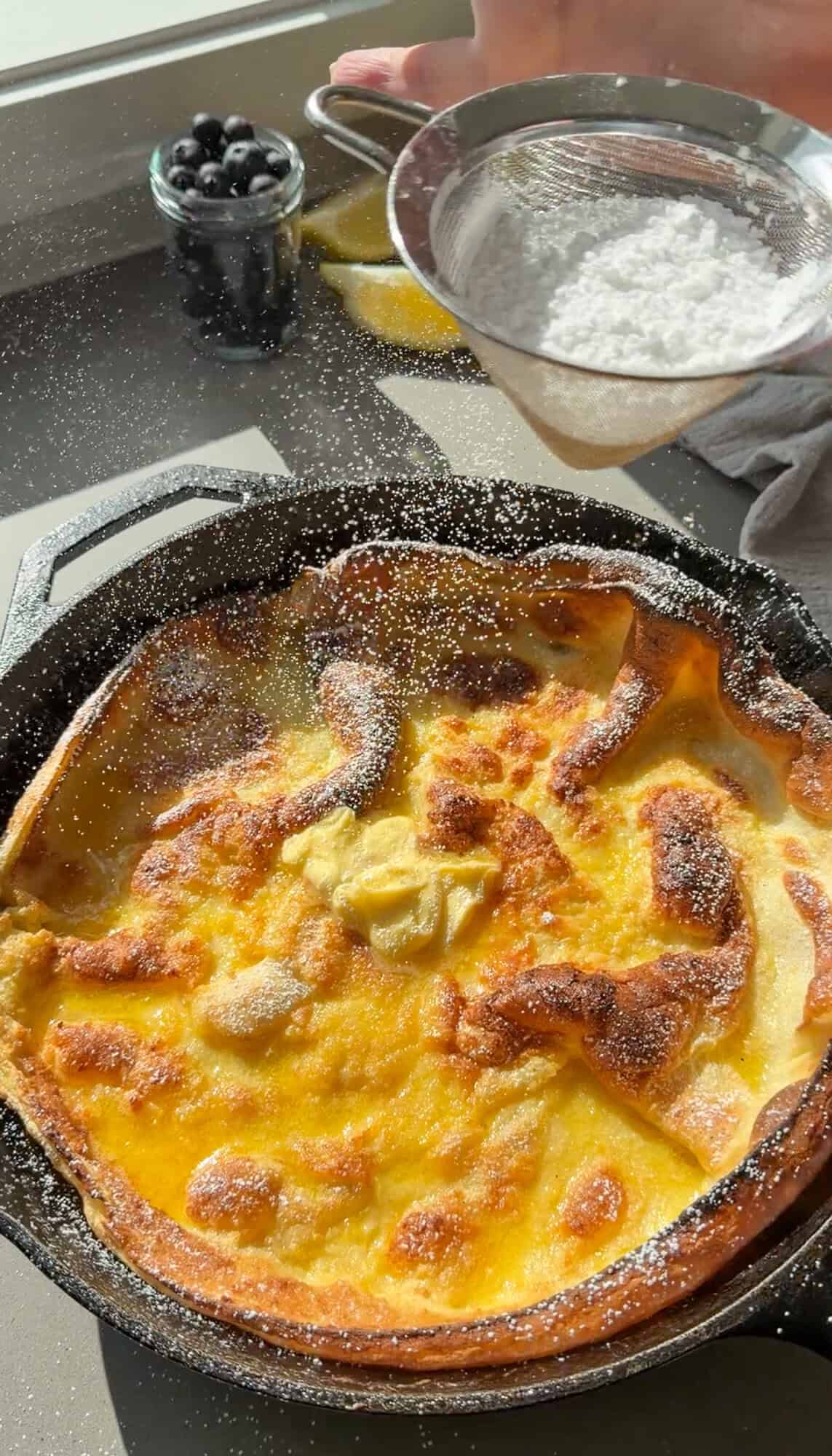
Top with whipped butter, powdered sugar, and fresh lemon juice. The lemon brightens the buttery richness and gives it that classic Dutch baby flavor.
Serve immediately while still warm and puffed (though it will deflate rapidly as it cools).
How to Make Whipped Butter
Whipped butter is incredibly easy to make and gives your Dutch baby that soft, restaurant-style buttery finish.
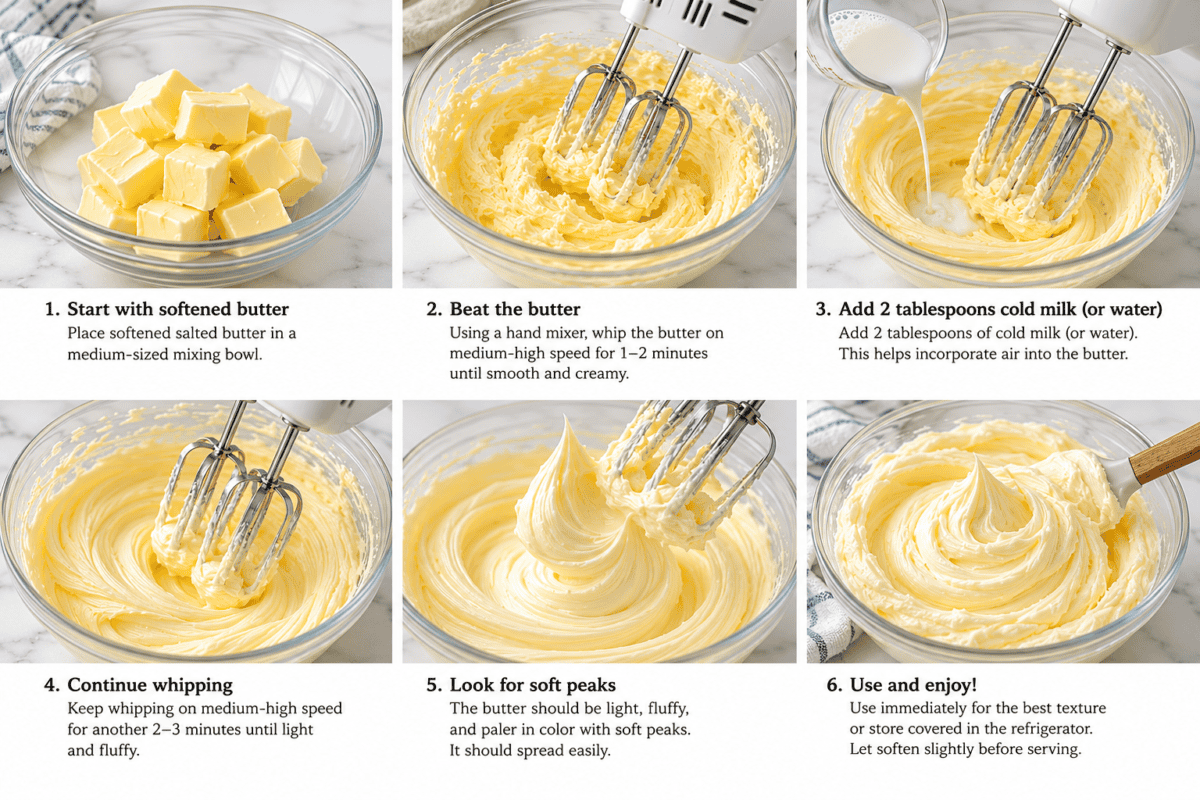
Start with 1 stick of softened salted butter and place it into a medium-sized mixing bowl. Using a hand mixer, whip the butter on medium-high speed for 1-2 minutes until smooth and creamy.
Add 2 tablespoons of cold milk (or water) and continue whipping for another 2-3 minutes. The extra liquid helps incorporate air into the butter, creating that light, fluffy texture. The butter should become paler in color with soft peaks and an airy consistency that spreads easily over warm pancakes, toast, or biscuits.
For the best texture, use immediately or store covered in the refrigerator and let soften slightly before serving.
More Breakfast Recipes to Try
If you love cozy breakfast recipes like this Dutch baby pancake, there are plenty of other brunch favorites worth trying. A few favorites include the orange cinnamon rolls for something sweet and citrusy, the pancake casserole or French toast waffles for an easy crowd-friendly breakfast, and the Starbucks-inspired brie and truffle egg bites when you want something savory. The almond croissants are another bakery-style favorite that feels extra special for weekends or holidays.
I hope you enjoyed this recipe for my Orange Cinnamon Rolls! I look forward to your questions and feedback below.
Please be sure to tag me @BadBatchBaking using hashtag #badbatchbaking if you made this recipe, and I will feature you on my story! Plus, I LOVE to see your baking accomplishments.
Dutch Baby Pancake Recipe
Equipment
- 10-inch cast iron skillet or pie pan
Ingredients
- 2 large eggs room temp
- ¾ cup milk room temp
- ½ cup unbleached all-purpose flour
- 1½ tbsp sugar
- 1 tsp pure vanilla extract
- pinch of salt
- 3 tbsp salted butter
For Serving
- powdered sugar
- whipped butter
- lemon wedges
Instructions
- Preheat oven to 425°F for at least 15 minutes to ensure it’s fully heated.
- In a medium-sized bowl, vigorously whisk together the eggs, milk, and vanilla until smooth and slightly frothy.
- Add the flour, sugar, and salt, then continue whisking until the batter is smooth and lump-free. The batter should be thin and pourable (like a crepe batter).
- Add butter to a cast-iron skillet and place it in the oven until fully melted and sizzling, about 5 minutes. Be careful not to burn the butter.
- Carefully remove the skillet from the oven and quickly baste (or use the butter stick itself) to coat the inner sides of the skillet with the hot butter.
- Immediately pour the batter into the center of the skillet directly over the hot butter. Do not stir or mix the butter into the batter.
- Return the skillet to the oven and bake for 18-20 minutes at 425°F or until the edges are deeply golden brown and center is set. If it's not finished cooking at this point, reduce oven temp to 325 degrees and bake another 5 minutes or until set.
- Remove from the oven and immediately top with whipped butter, powdered sugar, and fresh lemon juice.
- Serve immediately while warm and puffed (it deflates quickly).
Notes
The cast-iron skillet needs to be fully heated before adding the batter to achieve the signature puff. Don’t mix the butter and batter
Pouring the batter directly over the hot butter creates the best texture and crispy edges. Serve right away
Dutch babies naturally deflate as they cool, so they’re best enjoyed fresh from the oven.