This post may contain affiliate links. Please read our disclosure policy.
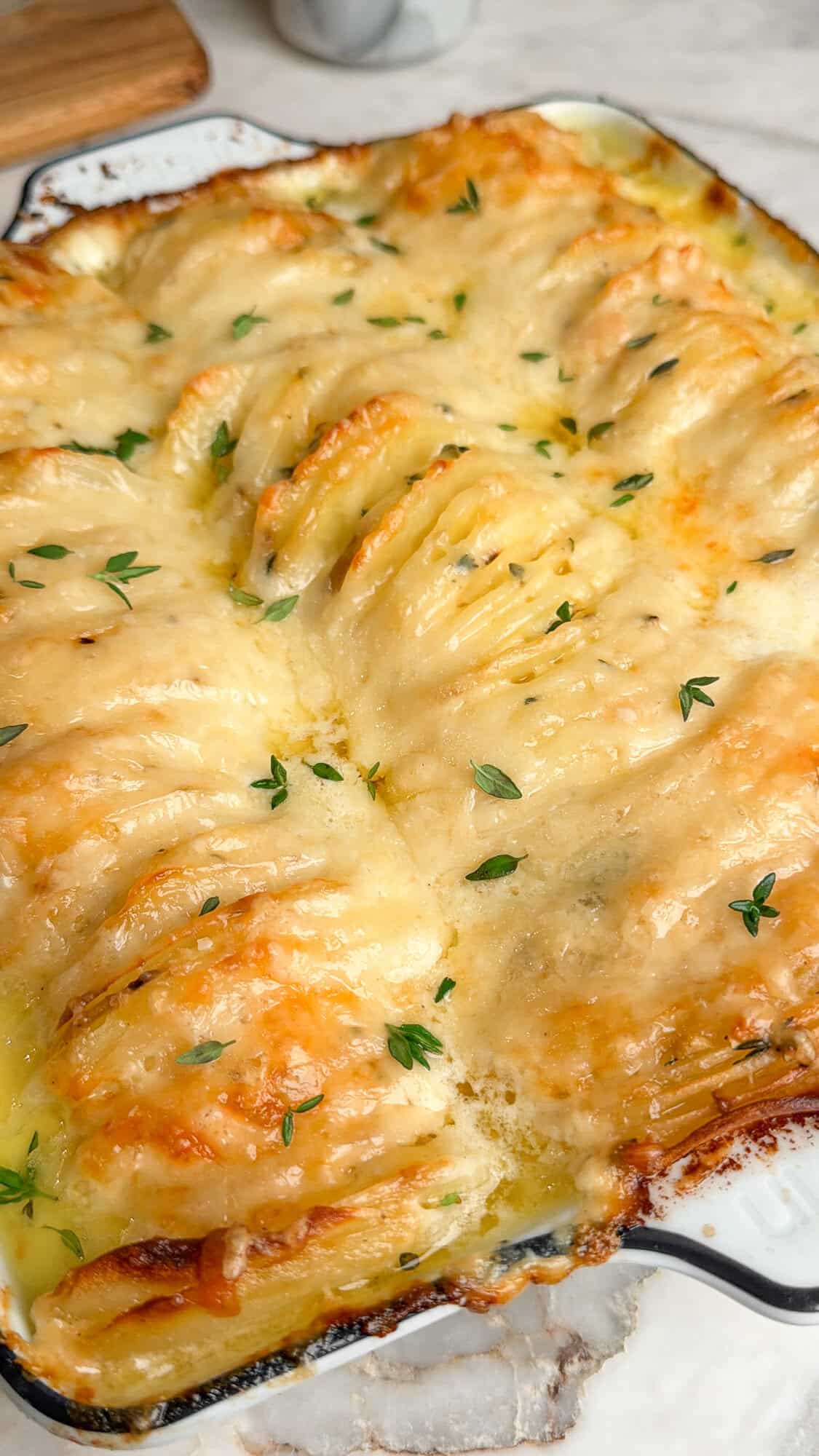
These Potatoes Au Gratin are a decadent potato side dish where thinly sliced Yukon Gold potatoes are baked until buttery-soft in a luscious garlic-and-thyme cream sauce, and finished with a blanket of melted Gruyère. Inspired by French potatoes dauphinois, this version gets its richness from heavy cream and crème fraîche, with an elegant upright presentation that’s especially beautiful for holiday dinners. The best part? There’s no roux, no precooking the potatoes, and no saucepan required.
What Are Potatoes Dauphinois?
Potatoes dauphinois, also known as gratin dauphinois, are a classic French potato dish originating from the Dauphiné region of southeastern France. Traditionally, thinly sliced potatoes are baked slowly in cream or milk with garlic until incredibly tender.
Potatoes au gratin is a broader term for potatoes baked with a browned topping, often cheese or breadcrumbs. In American kitchens, potatoes au gratin typically feature cheese layered throughout or melted over the top.
This recipe brings the two styles together. It uses the rich cream-based preparation of French dauphinois with the addition of nutty Gruyère cheese for a golden, cheesy finish. It’s not strictly traditional gratin dauphinois, but it has all the creamy elegance of the French classic.
Tips From My Kitchen
Use a mandoline for even slices. Consistent ⅛-inch slices are one of the keys to getting the potatoes to cook evenly. A mandoline makes quick work of slicing 3 pounds of potatoes and produces far more uniform results than slicing by hand. Always use the hand guard or a cut-resistant glove.
Never rinse the sliced potatoes. The starch on the surface of the potatoes helps naturally thicken the cream as they bake. Rinsing or soaking removes some of that starch and can introduce excess water into the casserole.
Don’t overpack the casserole. Upright potatoes look beautiful when arranged snugly together, but packing the slices too tightly can make it harder for the cream to circulate and may contribute to uneven cooking.
Test multiple areas for tenderness. When I first made these potatoes, some sections were perfectly soft while others still had a little resistance. That’s why I always test several spots before adding the cheese. Every slice should be buttery-soft, with no unpleasant firmness when you bite into it.
Save the Gruyère for the end. During my first test, I added some of the cheese before the long covered bake. Although the sauce tasted incredibly smooth and luscious, I noticed a few tiny white specks on the potatoes. My suspicion is that they came from cheese proteins exposed to prolonged heat. Now I reserve all the Gruyère for the final uncovered baking stage to help minimize graininess and excess fat separation.
Don’t worry about a little buttery separation. This is an incredibly rich dish made with heavy cream, crème fraîche, butter, and Gruyère. A small amount of butterfat around the edges isn’t unusual. What you want to avoid is a watery, grainy, or visibly broken sauce.
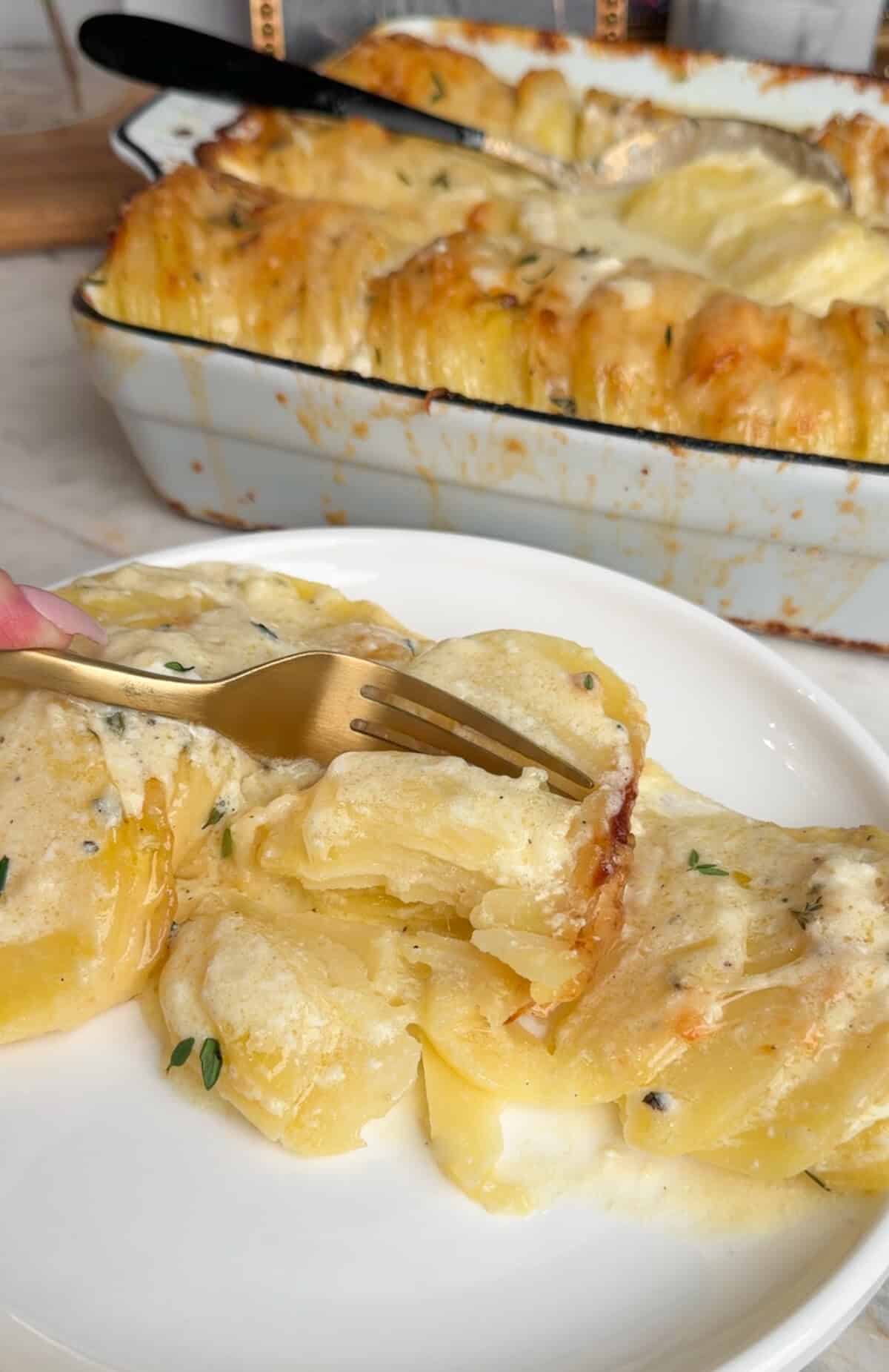
Give the potatoes time to rest. I know it’s tempting to dig in immediately, especially when the cheese is bubbling and golden, but 15–20 minutes of resting helps the sauce settle and the potatoes hold together when served.
Ingredients You’ll Need & Why
You only need a handful of ingredients to make these indulgent potatoes. Each one plays an important role in creating that rich, creamy sauce and perfectly tender texture.
- Yukon Gold Potatoes: You’ll need 3 pounds of gold potatoes. Their naturally buttery flavor and creamy texture make them an excellent choice for gratins. They also contain starch that helps thicken the sauce as the potatoes bake.
- Heavy Cream & Crème Fraîche: This combination is what makes the sauce so luscious. Heavy cream provides richness, while crème fraîche adds body and a subtle tanginess that balances the cheese and butter. Bring both to room temperature before mixing so they combine smoothly.
- Butter & Garlic: One tablespoon of melted butter adds extra richness, while three cloves of freshly grated or pressed garlic infuse the cream with savory flavor. Grating the garlic helps distribute it throughout the sauce without leaving large pieces.
- Fresh Thyme, Salt & Pepper: Fresh thyme adds an earthy, aromatic note that complements the Gruyère. Salt seasons the potatoes and cream, while black pepper provides a little warmth.
- Gruyère Cheese: This Swiss Alpine cheese has a wonderfully nutty, savory flavor and melts beautifully. Freshly shred it from a block for the best texture. All of the cheese is reserved for the final stage of baking rather than cooking it in the cream sauce for an extended period.
How to Make Potatoes Au Gratin
These potatoes take some time in the oven, but the hands-on preparation is surprisingly simple. The most important details are slicing the potatoes evenly, distributing the cream mixture, and making sure every section is completely tender before adding the cheese.
Step 1: Prepare the Cream Mixture
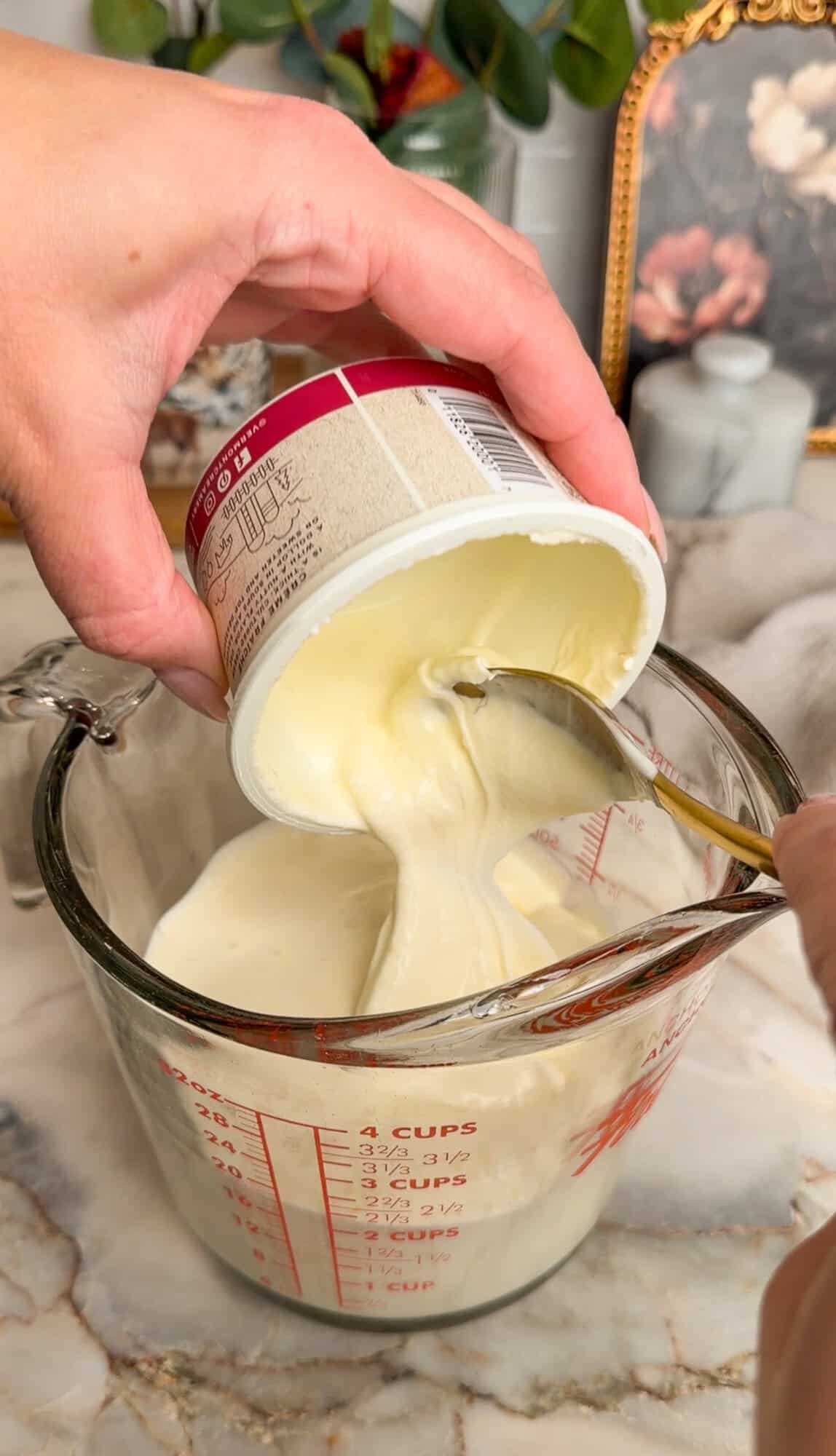
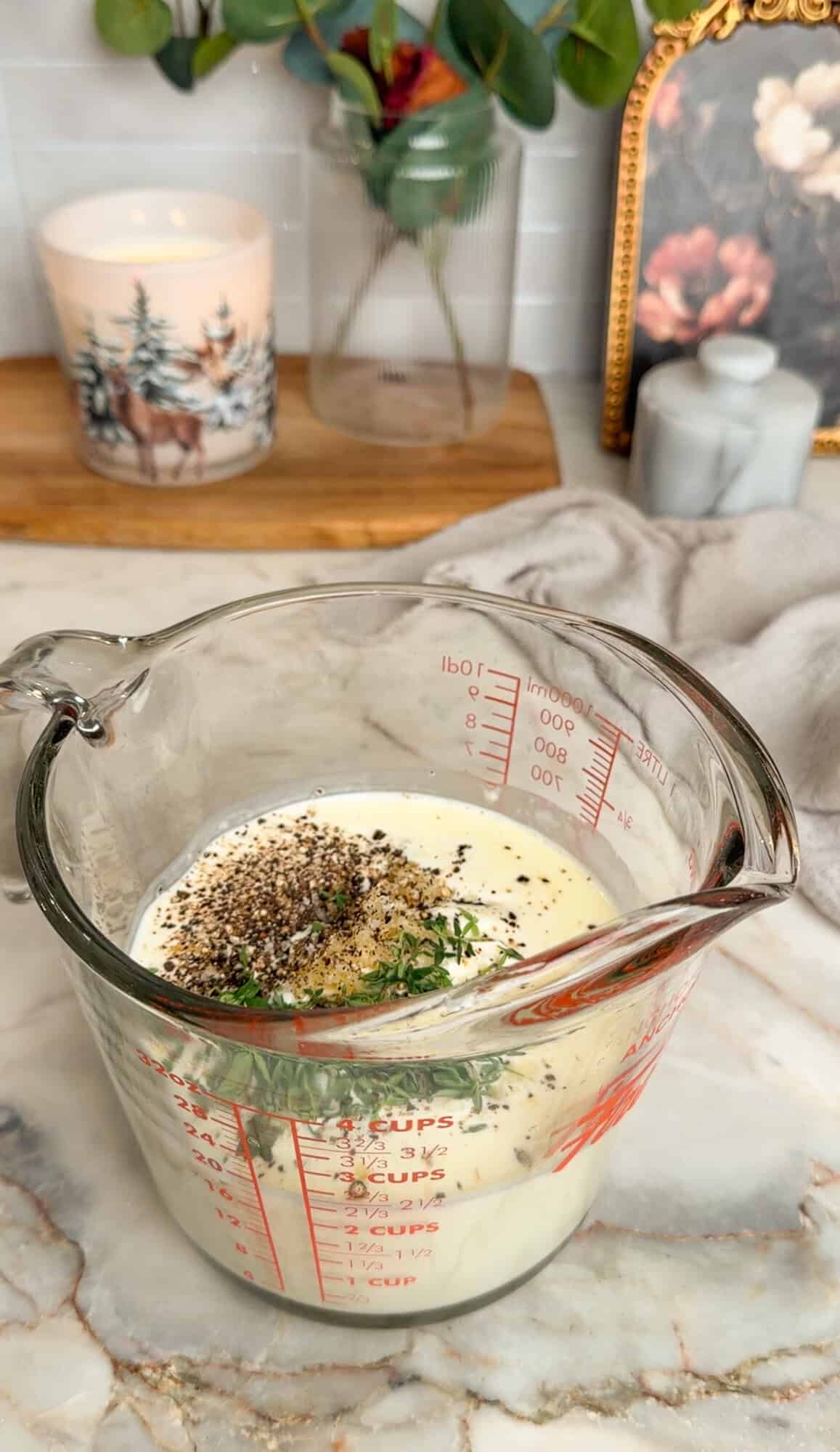
In a large glass measuring cup or mixing bowl, combine the room-temperature heavy cream, crème fraîche, melted (but not hot) butter, grated garlic, salt, black pepper, and fresh thyme leaves.
Whisk until the mixture is smooth, thick, and creamy, with the seasonings evenly distributed. The crème fraîche gives the mixture a slightly thicker consistency than ordinary heavy cream, which is exactly what you want.
Set aside while preparing the potatoes. There’s no need to heat the sauce on the stove.
Step 2: Slice the Potatoes
Preheat your oven to 350°F.
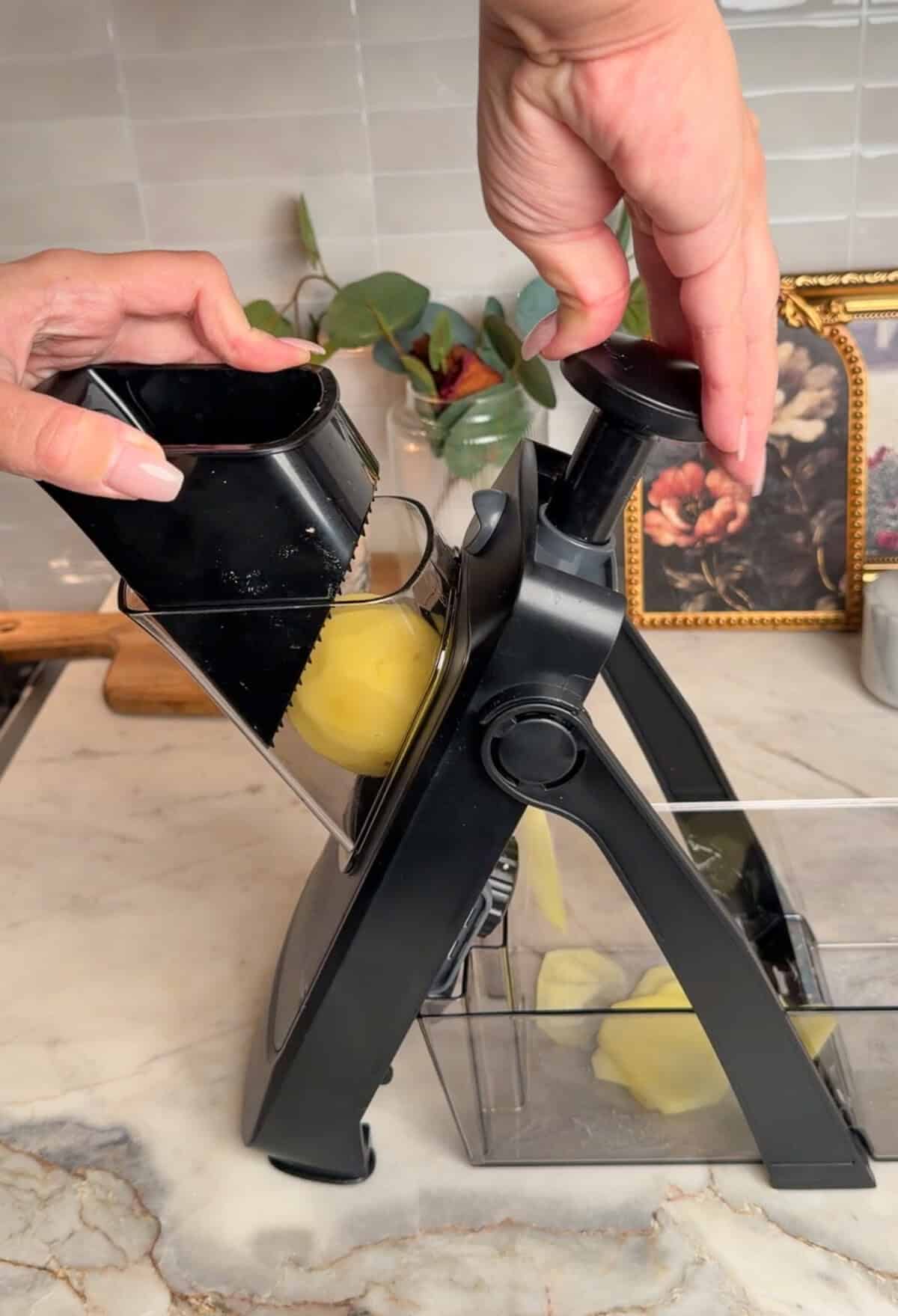
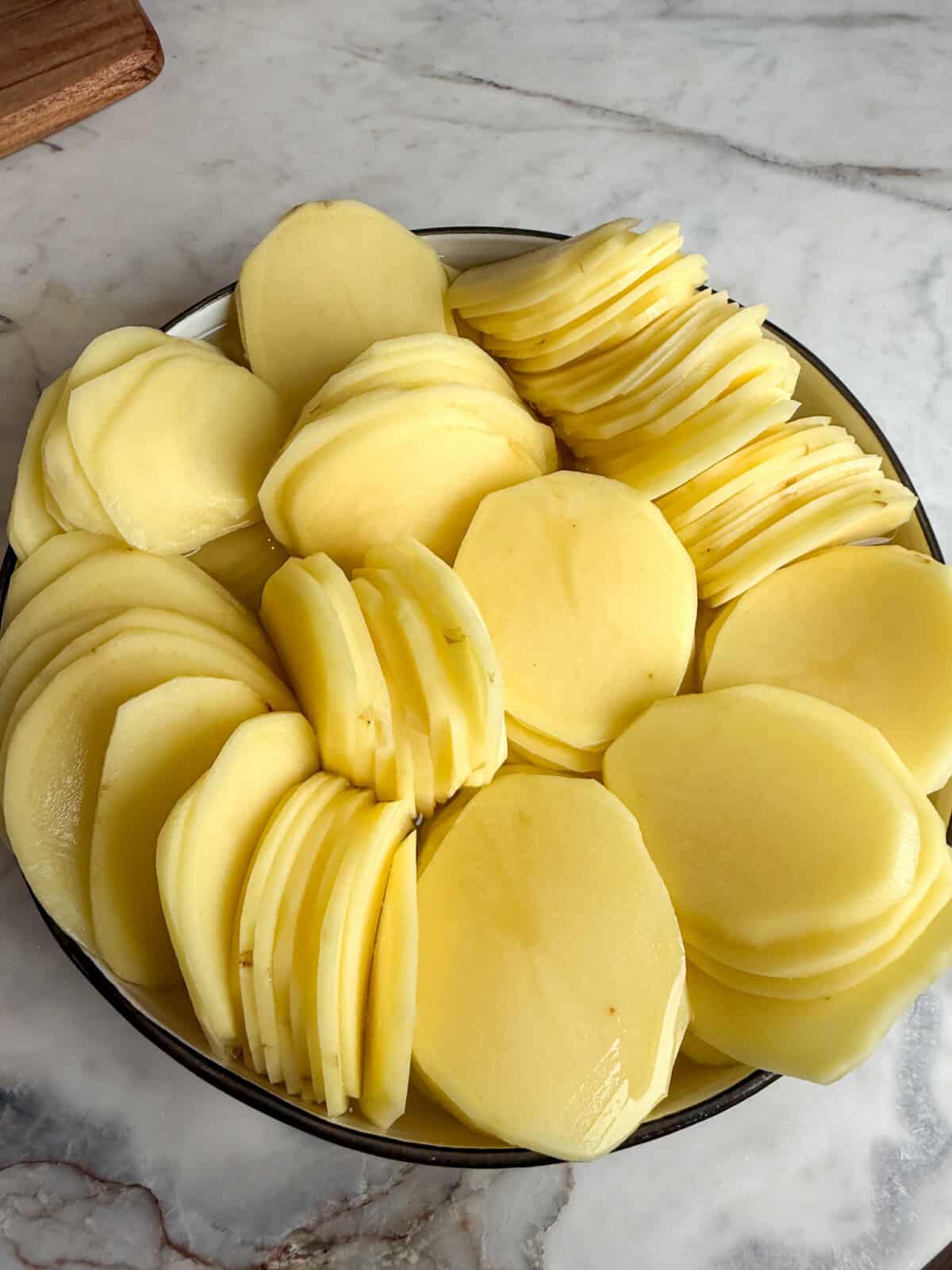
Peel the potatoes and use a mandoline to slice them into uniform ⅛-inch-thick rounds.
I strongly recommend using a mandoline here. Trying to slice 3 pounds of potatoes perfectly evenly by hand is incredibly difficult, and the thickness makes a noticeable difference in the finished dish.
If the slices are too thin, they can lose their definition and become almost mashed-potato-like. Too thick, and they’ll take considerably longer to soften and may slide apart when serving.
Do not rinse or soak the potatoes after slicing. Their natural surface starch helps thicken the cream sauce as they bake.
Step 3: Coat the Potatoes
Transfer the sliced potatoes to a large mixing bowl and pour the prepared cream mixture over them.
Gently toss the potatoes, using your hands or a flexible spatula to separate any slices that are stuck together. Continue until the slices are evenly coated in the thick, velvety cream mixture.
Coating the potatoes before arranging them helps the sauce reach between the layers, especially since crème fraîche makes the mixture thicker than a typical cream sauce.
Step 4: Arrange the Potatoes Upright
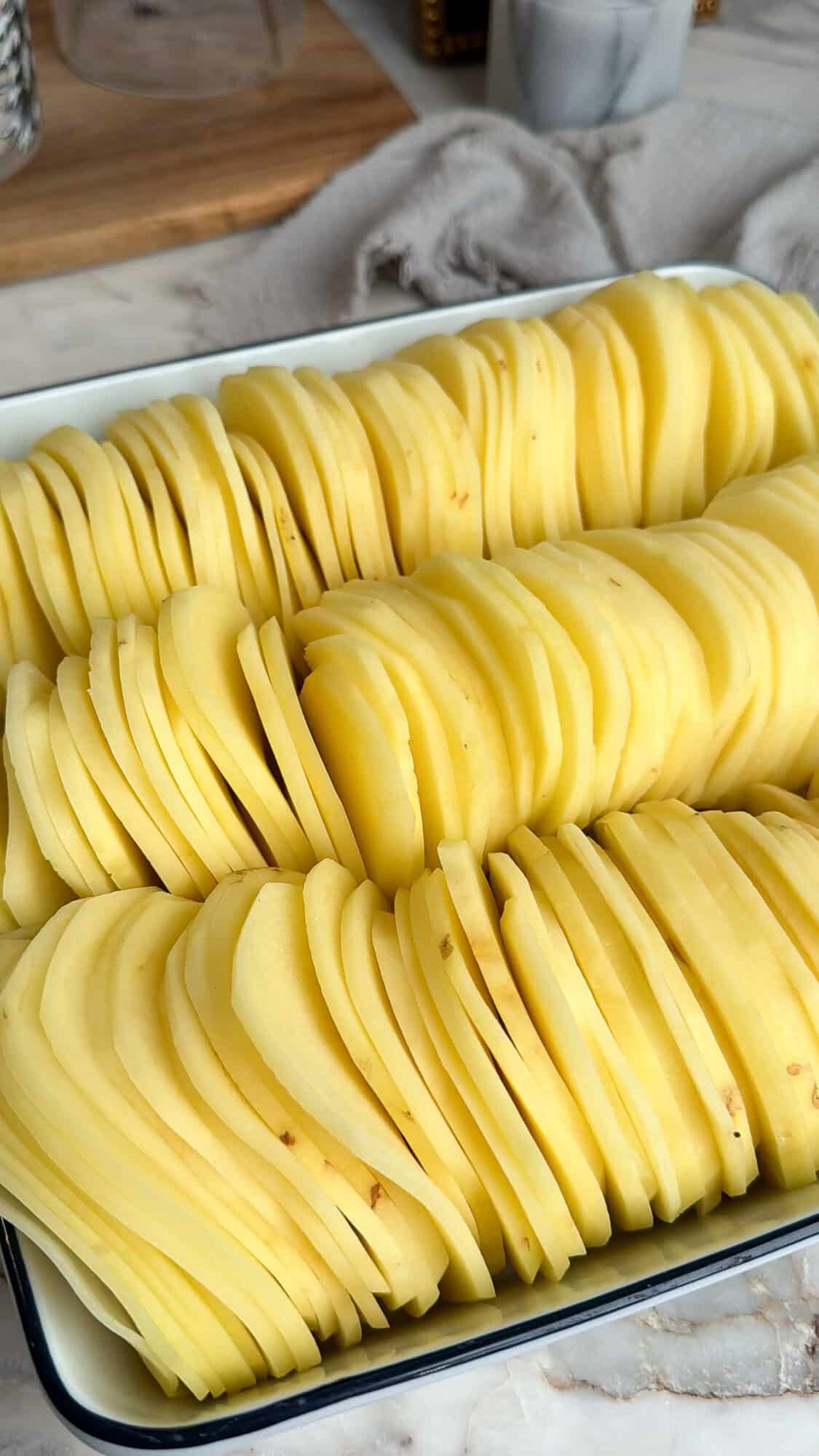
Working with several slices at a time, gather the coated potatoes into small stacks and arrange them upright, side by side, in a deep 9×9-inch casserole dish.
Continue until the baking dish is filled with neat rows of upright potato slices. The slices should fit snugly enough to remain standing, but avoid packing them excessively tightly.
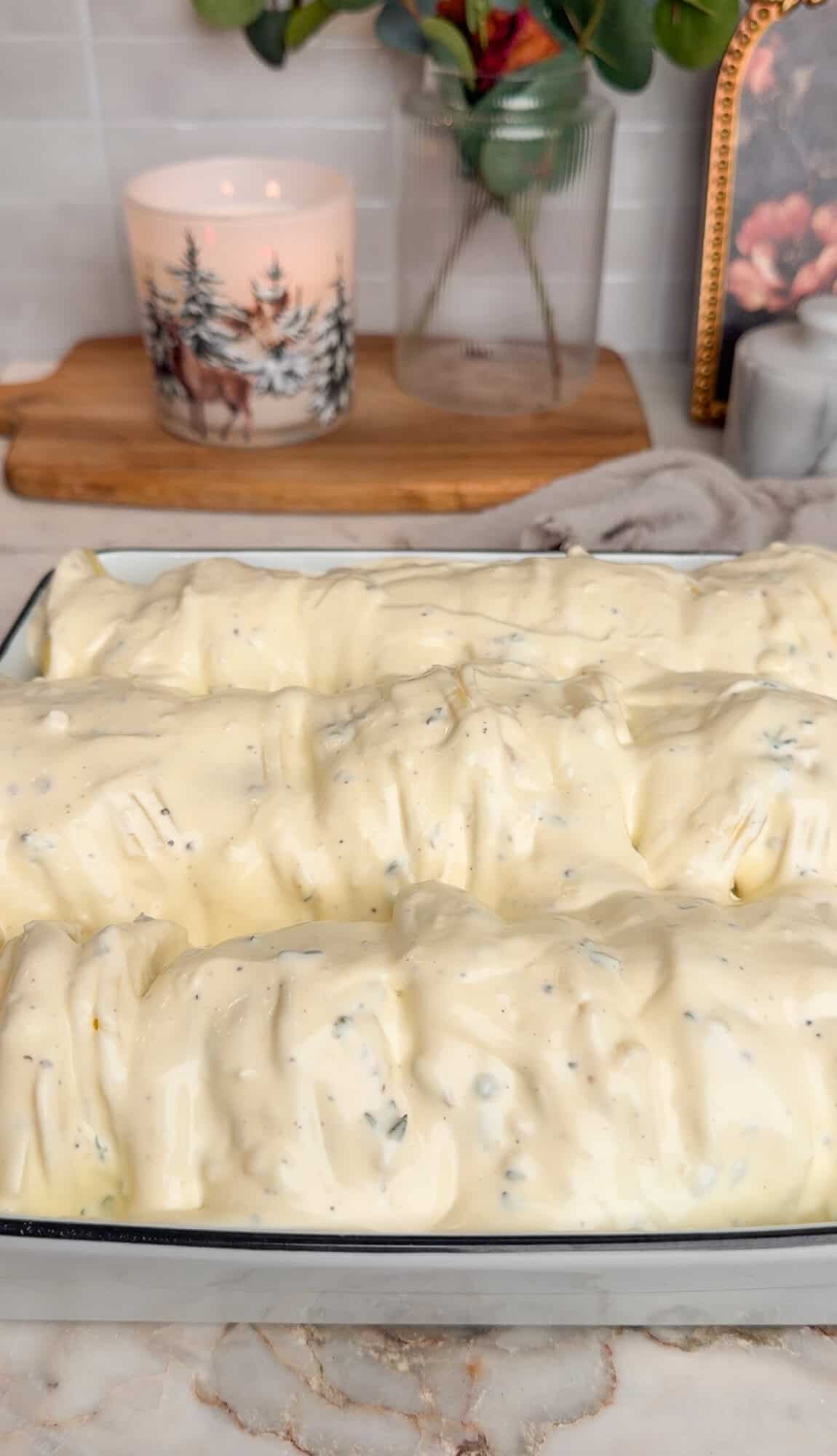
Use a spatula to scrape any remaining cream mixture from the mixing bowl over the potatoes.
The finished arrangement should resemble overlapping rows of potato slices, with the creamy mixture coating the potatoes and settling around them.
Step 5: Cover and Bake Until Completely Tender
Cover the baking dish loosely with aluminum foil and bake at 350°F for 1 hour and 15 minutes. I like to set my pan on top of a foil-lined baking dish in case any cream bubbles and boils over.
At this point, carefully lift the foil and test the potatoes with a fork in several different locations, including the center, edges, and any particularly tightly packed sections.
This is the single most important step in the recipe.
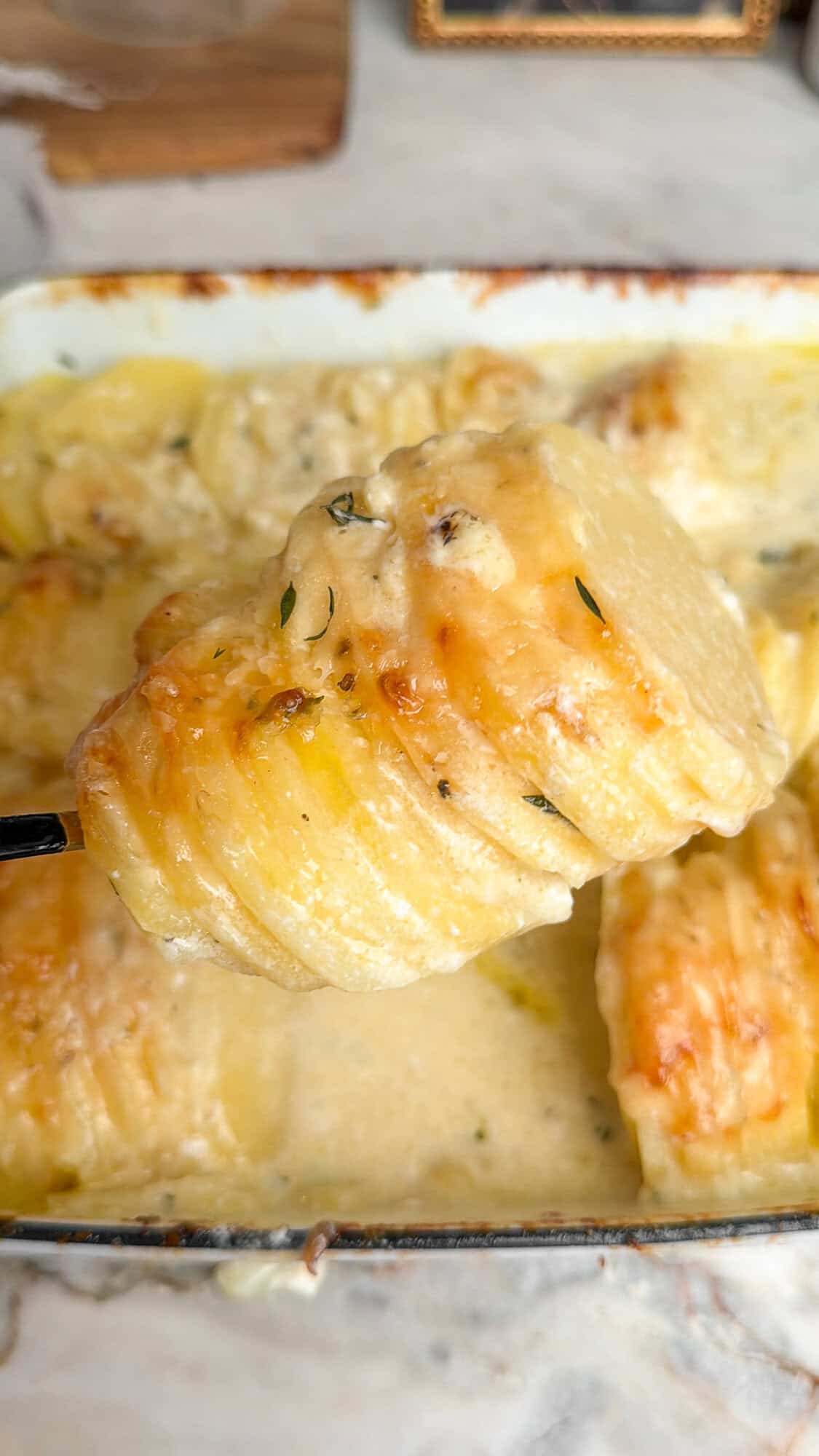
The fork should glide through the potatoes with absolutely no resistance, almost like sliding into softened butter. You shouldn’t feel even the slightest catch.
Don’t assume the potatoes are finished just because one area feels tender. Some sections can cook faster than others, especially when the potatoes are arranged upright.
If you feel resistance anywhere, cover the dish again and continue baking, checking every 10–15 minutes until the potatoes are completely tender throughout.
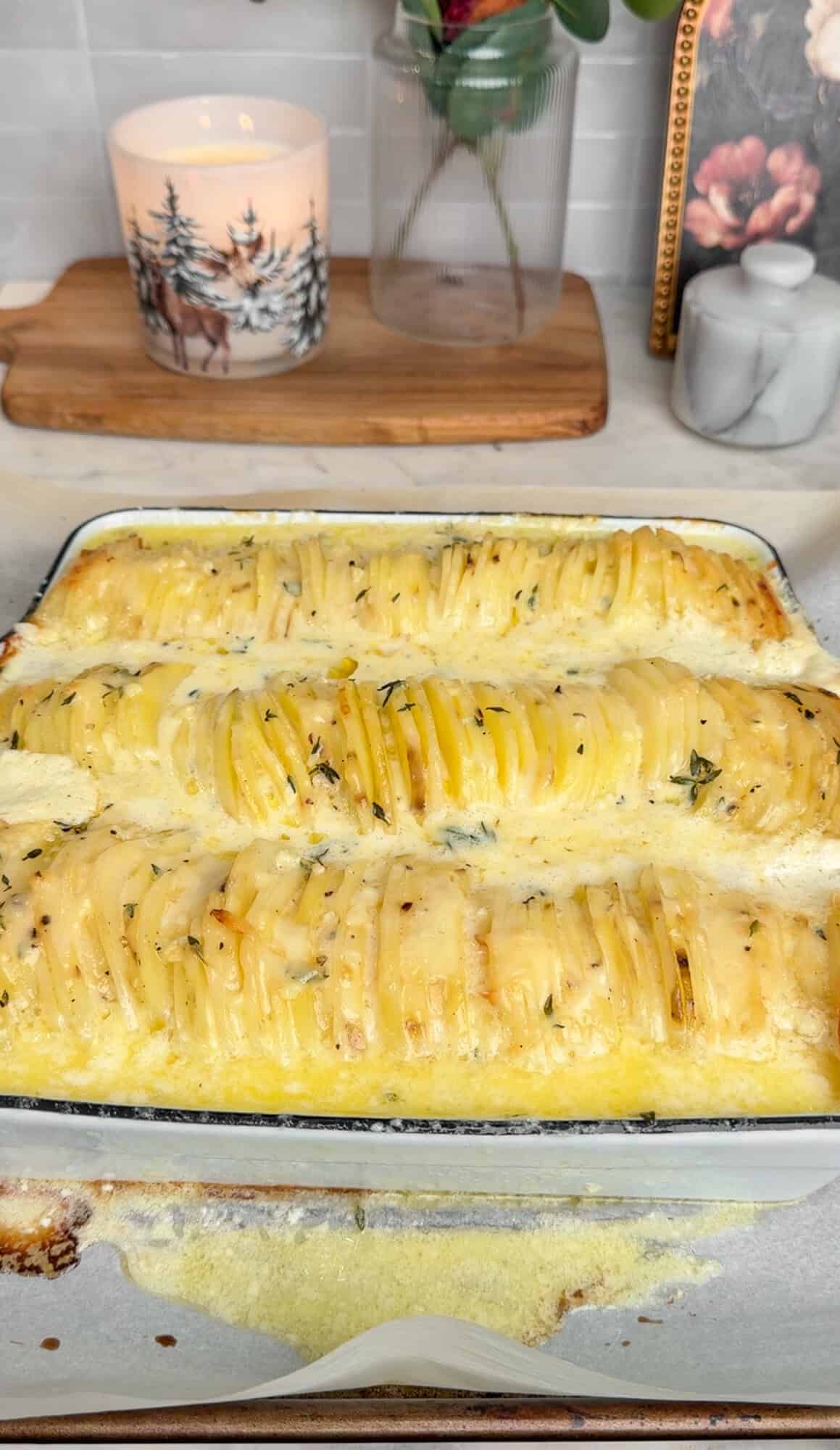
Depending on the depth of your baking dish, how tightly the potatoes are arranged, and the consistency of your slices, this stage may take 1 hour and 15 minutes to 1 hour and 45 minutes, or longer.
The potatoes must be fully tender before moving on to the cheese-topping stage.
Step 6: Add the Gruyère and Brown
Once the potatoes are completely tender, remove the baking dish from the oven and discard the foil.
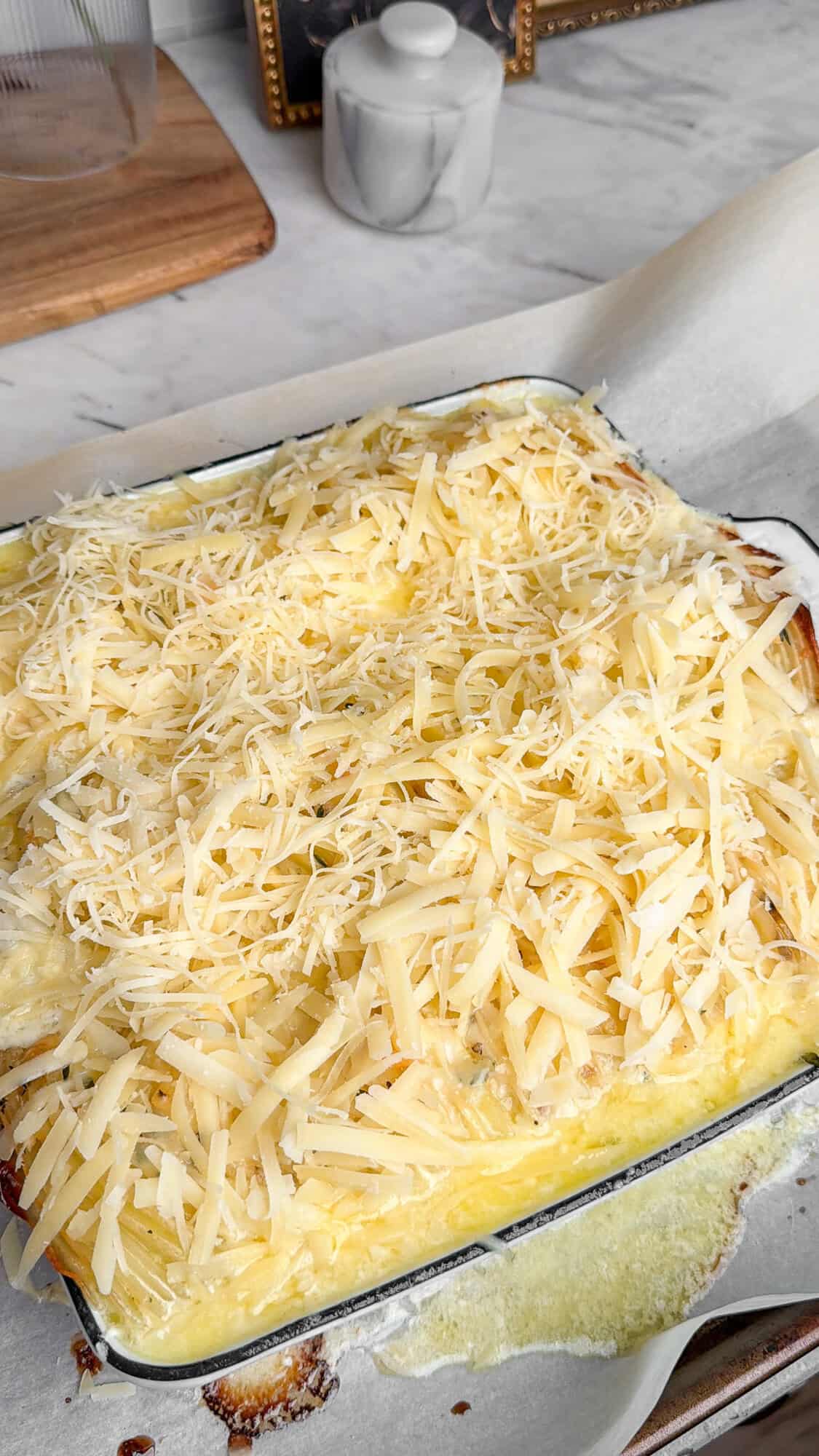
Sprinkle all 2½ cups of freshly shredded Gruyère evenly over the potatoes.
Return the dish to the oven, uncovered, for another 12–15 minutes, until the cheese is fully melted, bubbling, and lightly golden brown.
For a deeper golden finish, continue baking briefly as needed, watching carefully to prevent excessive browning or oil separation.
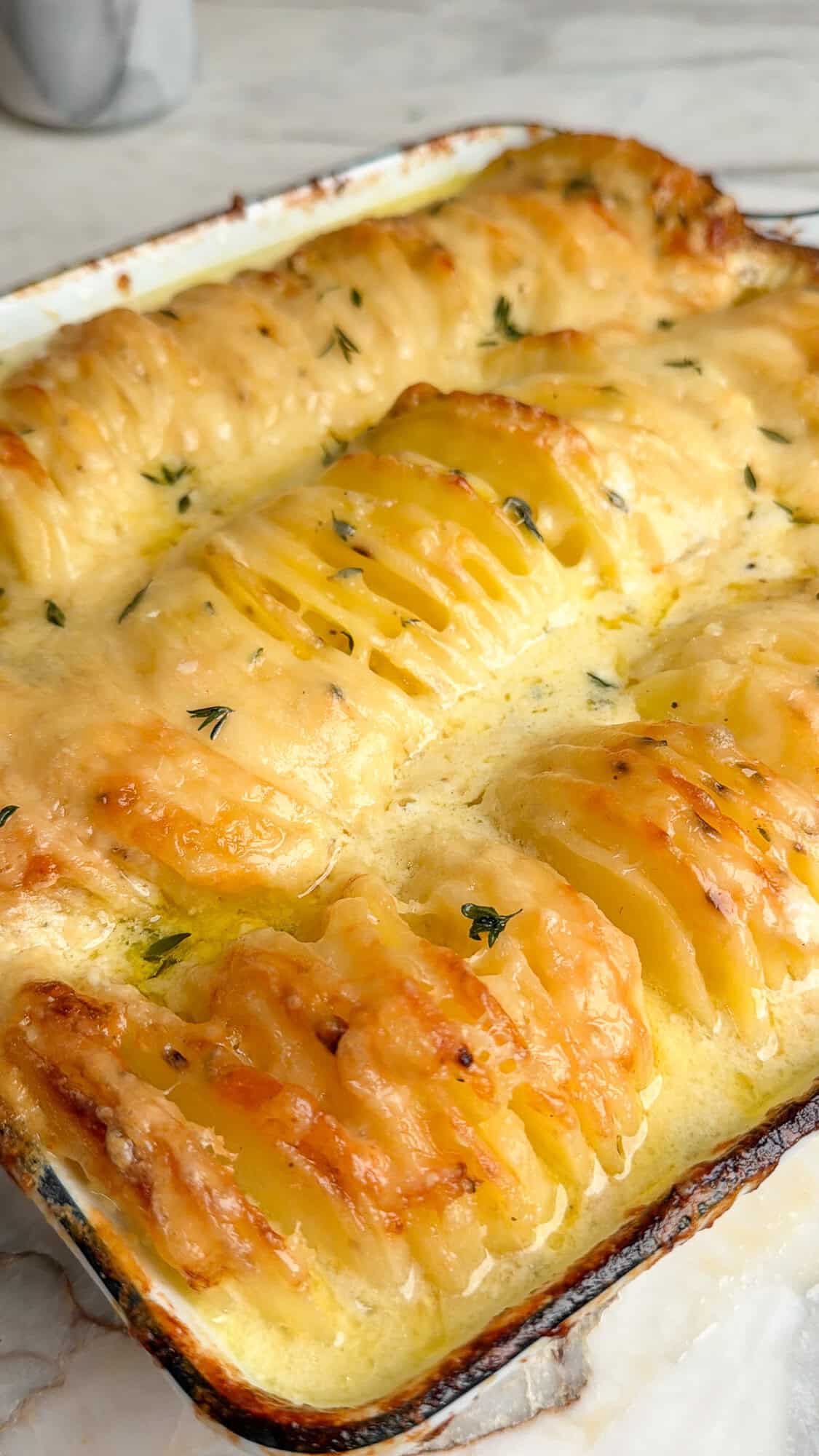
Step 7: Rest Before Serving
Remove the potatoes from the oven and allow them to rest for 15–20 minutes before serving.
This resting period is important! The sauce will settle and thicken slightly as the potatoes cool, making the gratin creamier and easier to serve.
Finish with a sprinkle of fresh thyme leaves for a beautiful, aromatic garnish.
An Easier Way to Layer Your Potatoes
If you prefer a more traditional casserole-style presentation, you can assemble these potatoes in flat layers instead of arranging them upright.
For this version, divide the sliced potatoes into three roughly equal portions.
Spread the first third of the potatoes evenly across the bottom of your baking dish. Pour over approximately one-third of the cream mixture and sprinkle with about ¾ cup of shredded Gruyère.
Repeat with the second layer of potatoes, cream, and another ¾ cup of Gruyère.
Finish with the remaining potatoes and cream mixture, reserving the final 1 cup of cheese for the topping.
Cover with foil and bake at 350°F, beginning to check for tenderness after 1 hour and 15 minutes. Once the potatoes are completely tender in multiple locations, uncover, sprinkle with the remaining cheese, and bake another 12–15 minutes until golden.
A note about the cheese: For the smoothest sauce and to minimize the risk of graininess, my preferred approach is to reserve all the Gruyère until the final uncovered bake, even when using flat layers. If you choose to layer cheese throughout, some fat separation or small white cheese-protein flecks are more likely during the longer baking period.
My Favorite Mandoline for Perfectly Sliced Potatoes
[Shop My Favorite Mandoline Slicer]
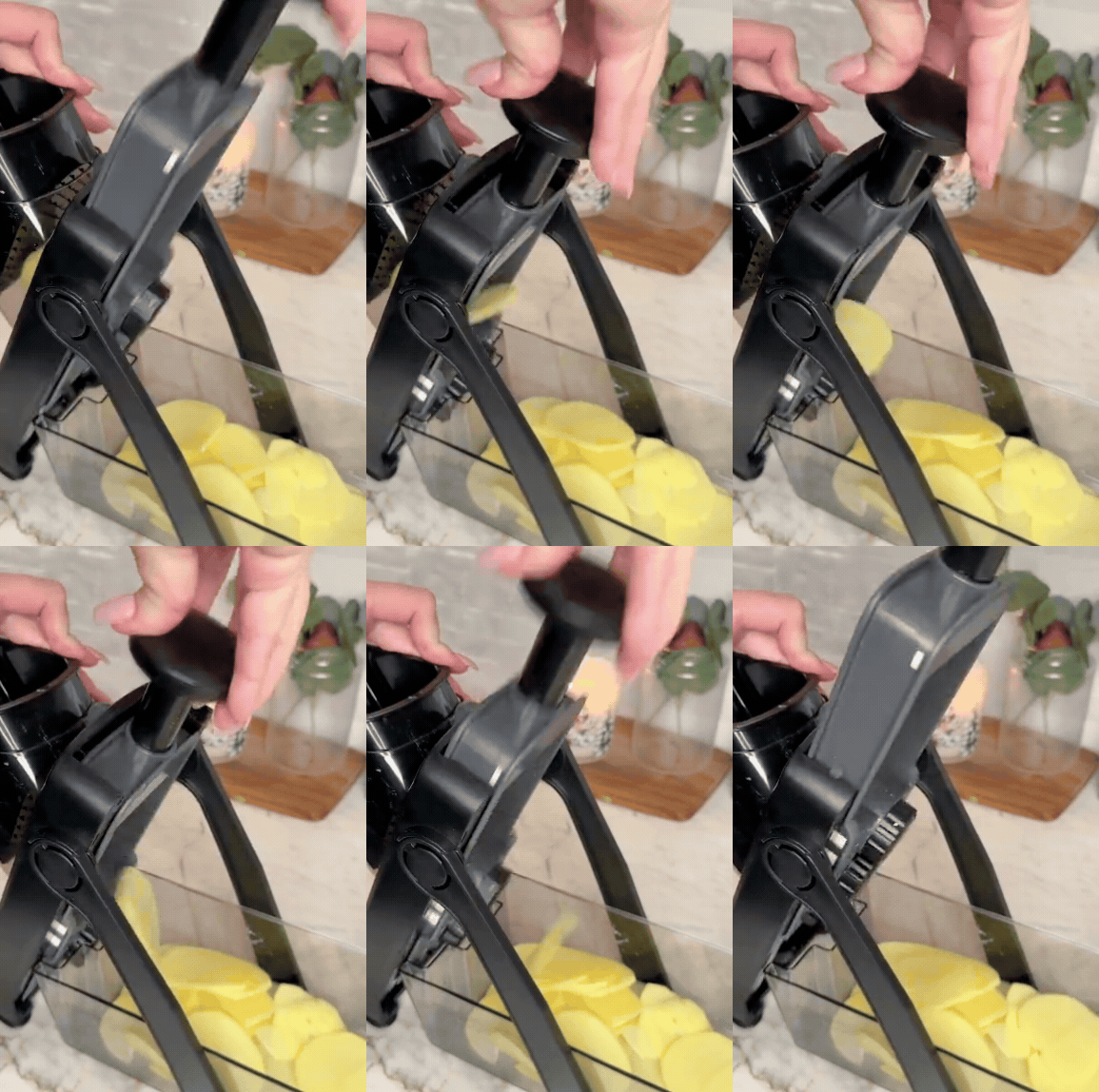
If you’ve ever tried slicing 3 pounds of potatoes into perfectly even ⅛-inch slices by hand, you know what a tedious task it can be. One of my absolute favorite kitchen tools is my upright, hand-pump mandoline slicer. Unlike a traditional mandoline, where you’re sliding food back and forth toward an exposed blade, this one has an enclosed blade and a pump-style handle that keeps your hands safely away from the cutting area.
It’s incredibly easy to use, makes quick work of slicing a mountain of potatoes, and produces beautifully uniform slices every time. I especially love it for recipes like these Potatoes Dauphinois, where consistent thickness is essential for even cooking. It’s one of those kitchen gadgets that genuinely makes prep work faster, easier, and so much less intimidating.
[Shop My Favorite Mandoline Slicer]
Can You Make Potatoes Au Gratin Ahead of Time?
Absolutely. These potatoes are a wonderful holiday side dish, and there are a couple of ways to prepare them ahead without sacrificing their creamy texture.
Prep the ingredients ahead: You can shred the Gruyère and prepare your seasonings a day in advance. Keep the cheese refrigerated in an airtight container. I recommend waiting until you’re ready to assemble the casserole before slicing the potatoes so they don’t discolor or lose their surface starch.
Bake ahead and reheat: For the most reliable make-ahead method, bake the potatoes until fully tender, then cool and refrigerate promptly in a covered dish. Keep the Gruyère separate and add it when reheating and finishing the casserole.
To serve, reheat the covered potatoes at 325–350°F until hot throughout, then uncover, add the cheese, and bake until melted and golden. A refrigerated casserole will need additional reheating time, so plan accordingly.
For food safety, previously cooked potatoes should reach 165°F in the center when reheated.
For Thanksgiving or Christmas: If oven space is limited, I prefer preparing the potatoes earlier in the day and reheating them closer to dinner rather than trying to assemble and bake everything at the last minute.
The potatoes may have been sliced too thickly, packed too tightly, or simply need more baking time. Don’t rely on the clock alone. Test several areas of the casserole with a fork and continue baking until every section is completely tender.
Small white flecks can sometimes come from cheese proteins that have been exposed to prolonged heat, while a little yellowish oil is often separated butterfat. For this recipe, reserving the Gruyère until the final baking stage helps reduce the risk of graininess. Using full-fat cream and crème fraîche also helps maintain a rich, smooth sauce.
Gruyère is my first choice because of its nutty flavor and excellent melting qualities. Comté is another wonderful option with a similar Alpine-style flavor. Freshly grated cheese is preferable to pre-shredded varieties.
Yes, although the finished texture will be different. Russets have more starch and tend to break down more readily, while Yukon Golds hold their shape better and have a naturally buttery, creamy consistency. I prefer Yukon Golds for the upright presentation.

More Recipes to Try
If you’re putting together a holiday menu, pair these creamy potatoes with other comforting side dishes that deserve a place on the table. A rich Sweet Potato Casserole adds a little sweetness, while Slow Cooker Creamed Corn is a convenient option when oven space is limited.
For more cozy, indulgent dishes, try Loaded Scalloped Potatoes or a homemade Corn Casserole. These are the kinds of comforting sides that turn a simple roasted main dish into a memorable family dinner.
Made This Recipe?
If you make these Potatoes Au Gratin, I’d love to hear how they turned out! Leave a star rating and comment below to let me know what you think. And if you share your creation on Instagram, be sure to tag @badbatchbaking so I can see your beautiful potatoes!
Potatoes Au Gratin Recipe (French Potatoes Dauphinois)
Equipment
- Mandoline ideal for uniform potato slices
Ingredients
- 3 lbs Yukon Gold potatoes uniformly sized is ideal
- 1 1/2 cups heavy cream room temperature
- 1/2 cup crème fraîche room temperature
- 1 tbsp butter melted and slightly cooled
- 3 cloves garlic grated or pressed
- 1 tsp salt
- 1/2 tsp freshly ground black pepper or to taste
- 2 tsp fresh thyme leaves plus more for garnish
- 2 1/2 cups Gruyère cheese freshly shredded
Instructions
- Prepare the Cream Mixture. In a large glass measuring cup or mixing bowl, whisk together the heavy cream, crème fraîche, melted butter, grated garlic, salt, pepper, and fresh thyme leaves until smooth and creamy.
- Preheat and Slice the Potatoes. Preheat the oven to 350°F. Peel the potatoes and use a mandoline to slice them into uniform ⅛-inch rounds. Do not rinse or soak the potatoes after slicing; their natural surface starch helps thicken the cream sauce.
- Coat the Potatoes. Transfer the sliced potatoes to a large mixing bowl. Pour the cream mixture over the potatoes and gently toss, separating the slices as needed until they're individually coated.
- Arrange the Potatoes Upright. Gather several coated potato slices into small stacks and arrange them upright, side by side, in a deep 9×9-inch or 11×7-inch casserole dish (9×13 can be used if assembling as flat-lay SEE NOTES). Arrange them snugly without compressing them too tightly. Scrape any remaining cream mixture from the bowl over the potatoes.
- Cover and Bake. Cover the baking dish loosely with aluminum foil and transfer it to the preheated oven. Place on a foil-lined baking sheet in case any cream boils over. Bake for 1 hour and 15 minutes, then check for tenderness. Insert a fork into several different sections of the casserole, including the center, edges, and tightly packed areas. The fork should slide effortlessly through the potatoes with absolutely zero resistance, like pushing it into softened butter.
- Continue Baking Until Completely Tender. If you feel any resistance, replace the foil and continue baking, checking every 10-15 minutes. Some sections may become tender before others. Do not proceed until the potatoes are completely soft throughout. It can take up to 1 hr 45 minutes.
- Add the Gruyère. Once the potatoes are completely tender, remove the foil and sprinkle all 2½ cups of freshly shredded Gruyère evenly over the top. Return the casserole to the oven, uncovered, and bake for 12–15 minutes, or until the cheese is melted, bubbling, and golden brown.
- Rest and Serve. Remove the casserole from the oven and let it rest for 15–20 minutes. The cream sauce will settle and thicken slightly as the potatoes cool. Garnish with additional fresh thyme leaves and serve warm.
Notes
- Traditional Flat-Layer Alternative: Instead of arranging the potatoes upright, divide the sliced potatoes into three portions and arrange them in three flat, overlapping layers in the casserole dish. Distribute approximately one-third of the cream mixture over each layer. Cover and bake as directed, testing multiple areas for tenderness. Reserve all 2½ cups of Gruyère for the final uncovered baking stage.
- Potato Thickness: A mandoline is strongly recommended for consistent ⅛-inch slices. Use a safety guard or cut-resistant glove.
- Doneness: Never rely on baking time alone. The potatoes must be completely tender in multiple locations before adding the cheese.
- Cheese: Reserve all the Gruyère for the final 12–15 minutes to reduce prolonged exposure to heat and minimize the risk of graininess or excess oil separation.
- Make Ahead: For advance preparation, bake the potatoes until fully tender, cool and refrigerate promptly, and keep the cheese separate. Reheat the covered potatoes until hot throughout (165°F in the center), then add the Gruyère and finish uncovered until golden. This is a suggested make-ahead method that should be tested before relying on it for a major holiday meal.
- Storage: Refrigerate leftovers in an airtight container for up to 3–4 days. Reheat covered in the oven or microwave until heated through.